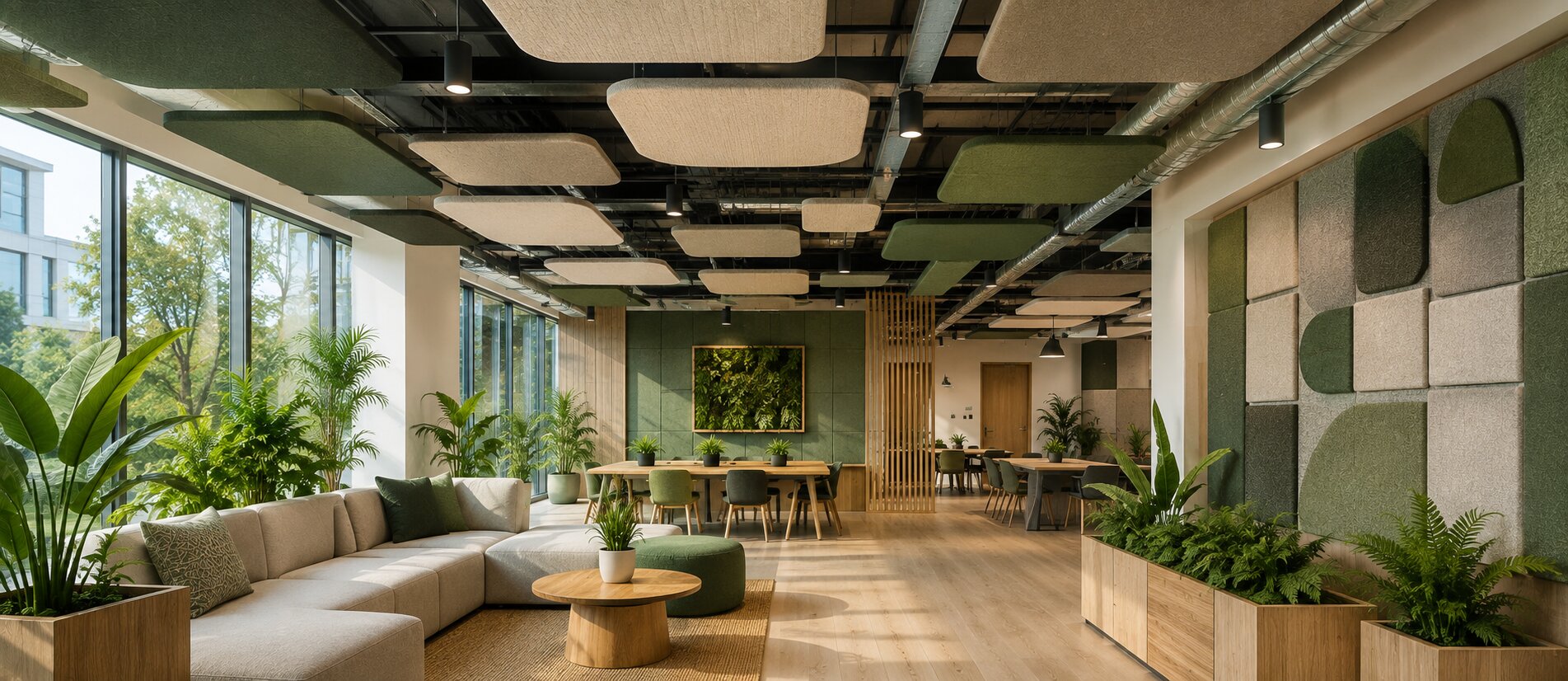
Modern buildings are increasingly designed with sustainability in mind. Energy efficiency, responsible material selection and healthier indoor environments are now important considerations in architectural and interior design.
Acoustic performance is an important part of this approach. Sustainable acoustic design aims to create comfortable and acoustically balanced spaces while also considering the environmental impact of the materials and systems used.
From recycled fibres and natural materials to responsibly manufactured acoustic panels, there are many options available for projects that want to combine acoustic performance with sustainable design principles.
Sustainable acoustic design is about achieving good sound
performance without overlooking the environmental impact,
durability and lifecycle of the materials used.
What Is Sustainable Acoustic Design?
Sustainable acoustic design is an approach that considers acoustic comfort together with environmental responsibility. Instead of focusing only on sound absorption or sound insulation, it considers the complete role of acoustic materials within a building.
This can include the origin of raw materials, manufacturing processes, recycled content, durability, maintenance, indoor environmental quality and end-of-life considerations.
The objective is to create spaces that provide effective acoustic performance while supporting broader sustainability goals.
Why Sustainability Matters in Acoustic Design
Acoustic materials can occupy significant areas of walls, ceilings and other interior surfaces. Choosing materials carefully can therefore contribute to the overall environmental performance of a building.
Sustainable material selection can also support healthier interiors, longer service life and reduced material waste.
For architects, interior designers and building owners, acoustic performance and sustainability do not necessarily have to be competing priorities.
Eco-Friendly Acoustic Materials
A variety of materials can be considered when developing sustainable acoustic solutions.
- Recycled polyester acoustic panels.
- Recycled textile-based acoustic products.
- Wood-based acoustic materials from responsible sources.
- Natural fibre acoustic products.
- Cork-based acoustic materials.
- Cellulose and recycled paper-based products.
- Other low-impact acoustic materials selected according to project requirements.
The suitability of each material depends on its acoustic performance, installation requirements, durability, maintenance and the overall objectives of the project.
Recycled Polyester Acoustic Panels
Recycled polyester is increasingly used in acoustic panels and interior sound-absorbing products.
These materials can provide effective sound absorption while incorporating recycled content into the building interior.
Polyester acoustic panels can also be manufactured in different shapes, colours and thicknesses, making them suitable for offices, educational spaces, meeting rooms and other modern interiors.
Natural Fibre Acoustic Materials
Natural fibres can also be considered for sustainable acoustic applications.
Depending on the product and application, materials derived from natural fibres may provide sound absorption while supporting the use of renewable or bio-based resources.
However, material selection should always consider durability, moisture resistance, fire performance and long-term maintenance requirements.
Wood-Based Acoustic Solutions
Wood is widely used in architectural acoustic applications because it combines visual appeal with useful acoustic characteristics.
Wood acoustic panels, slatted systems and perforated surfaces can be integrated into walls and ceilings while contributing to a natural architectural appearance.
Where sustainability is an important project objective, the source, certification, manufacturing process and lifecycle of the wood product should be considered.
Cork for Sustainable Acoustic Design
Cork is a natural material that can be used in certain acoustic applications.
Its lightweight structure and natural cellular composition can make it useful for acoustic and interior applications where appropriate.
Cork-based solutions can also provide a distinctive natural aesthetic in offices, hospitality spaces and residential interiors.
Recycled Materials and Circular Design
One important aspect of sustainable acoustic design is reducing dependence on virgin raw materials.
Acoustic products manufactured using recycled materials can help incorporate recovered resources into building interiors.
Designers can also consider whether products can be repaired, reused, recycled or responsibly disposed of at the end of their service life.
Low-VOC Acoustic Materials
Material selection can also influence indoor environmental quality.
Where appropriate, designers may consider acoustic products with low emissions of volatile organic compounds and products designed for healthier indoor environments.
This is particularly relevant in offices, schools, healthcare facilities and other spaces where occupants spend significant amounts of time indoors.
Sustainability Should Not Replace Acoustic Performance
An acoustic material should not be selected only because it is described as environmentally friendly.
The material must also provide the acoustic performance required for the space.
Factors such as sound absorption, sound transmission, reverberation time, frequency response, durability and installation method should all be considered.
A sustainable acoustic solution is successful when it achieves the required acoustic objective while also meeting the project's environmental requirements.
Considering the Full Material Lifecycle
Sustainable acoustic design should consider more than the material's appearance or recycled content.
A lifecycle approach can consider where raw materials originate, how products are manufactured, how they are transported, how long they are expected to last and what happens when they are removed.
Durable products that remain effective for many years can reduce the need for frequent replacement.
Sustainable Acoustic Ceilings
Ceilings provide a large surface area for acoustic treatment and can therefore play an important role in sustainable acoustic design.
Acoustic ceiling panels, clouds and baffles can improve sound absorption while being integrated into the overall architectural concept.
Selecting durable and responsibly manufactured ceiling systems can support both acoustic and sustainability objectives.
Sustainable Acoustic Design for Offices
Modern offices often combine open work areas, meeting rooms, collaboration zones and private spaces.
Sustainable acoustic panels can be used to control reverberation and improve speech comfort while supporting the visual and environmental goals of the workplace.
Proper acoustic zoning can also reduce the amount of material required by placing acoustic treatment where it provides the greatest benefit.
Sustainable Acoustic Design for Educational Buildings
Schools, colleges and lecture spaces require good speech intelligibility so students can clearly understand teachers and presentations.
Sustainable acoustic materials can be incorporated into classrooms, corridors, libraries and common areas to help create comfortable learning environments.
Material durability is particularly important in educational environments because acoustic surfaces may experience frequent daily use.
Sustainable Acoustic Design for Healthcare Facilities
Healthcare environments require acoustic comfort as well as careful consideration of hygiene, durability and maintenance.
Sustainable acoustic products should therefore be evaluated not only for environmental characteristics but also for their suitability for healthcare applications.
Acoustic planning can help reduce unwanted background noise and create calmer environments for patients, visitors and healthcare professionals.
Sustainable Acoustic Design in Hospitality Spaces
Hotels, restaurants and other hospitality spaces often use acoustic materials as part of the interior design.
Sustainable acoustic solutions can combine visual appeal, sound absorption and responsible material selection.
This allows acoustic treatment to become an integrated architectural element rather than simply a functional addition.
How to Choose Sustainable Acoustic Materials
When selecting eco-friendly acoustic materials, designers should consider several factors.
- Required sound absorption performance.
- Sound transmission requirements.
- Recycled or renewable material content.
- Product durability and expected service life.
- Indoor air quality considerations.
- Fire and safety requirements.
- Moisture and maintenance requirements.
- Manufacturing and transportation considerations.
- Reuse, recycling or end-of-life possibilities.
- Overall project cost and lifecycle value.
Integrating Acoustic and Sustainable Design
The best results are achieved when acoustic requirements are considered alongside architectural and environmental objectives from the beginning of the project.
Early coordination allows designers to determine where acoustic treatment is required, what type of material is appropriate and how it can be integrated into the building design.
This can help avoid unnecessary material use while improving the overall performance of the space.
The Future of Sustainable Acoustic Design
As sustainable construction becomes increasingly important, acoustic design is also evolving toward more responsible material choices and integrated building strategies.
New acoustic products are being developed using recycled, renewable and alternative materials while maintaining the acoustic performance expected from modern building systems.
The future of acoustic design will increasingly involve balancing acoustic comfort, aesthetics, durability, occupant wellbeing and environmental responsibility.
Sustainable Acoustic Solutions by Ray Acoustics
At Ray Acoustics, acoustic design can be developed with consideration for the specific requirements of each building and its occupants.
From offices and educational facilities to healthcare, hospitality and other modern spaces, acoustic treatment can be integrated with architectural and interior design objectives.
Sustainable material selection can also be considered where environmental performance is an important part of the project brief.
Conclusion
Sustainable acoustic design demonstrates that environmental responsibility and acoustic comfort can work together.
Recycled materials, natural fibres, responsibly sourced wood, cork and other eco-friendly acoustic products can provide useful options for modern buildings.
However, sustainability should always be considered together with acoustic performance, durability, safety, maintenance and lifecycle requirements.
By selecting appropriate materials and planning acoustic treatment from the early stages of a project, designers can create spaces that are quieter, more comfortable and better aligned with sustainable building goals.
If you are planning an environmentally responsible building and require professional acoustic design, Ray Acoustics can help develop acoustic solutions tailored to your project's requirements.