In the modern built environment, acoustics have emerged as a critical factor in creating spaces that are comfortable, functional, and successful. End-to-end acoustic design, analysis, and consultation services provide comprehensive solutions that address every aspect of acoustic performance—from initial concept through final verification and beyond. Whether you're designing a new building, renovating an existing space, or addressing specific acoustic challenges, professional acoustic consultation ensures that your project achieves its acoustic goals.
Acoustic consultation is not a one-time intervention but a continuous process that integrates seamlessly with the design and construction workflow. End-to-end services provide a holistic approach that considers every factor affecting acoustic performance, including room geometry, materials, mechanical systems, and building construction. This comprehensive approach ensures that acoustic considerations are addressed at the right time, in the right way, for optimal results.
"End-to-end acoustic consultation is the difference between a space that sounds good by accident and one that sounds exceptional by design. Professional acoustic services ensure that every space achieves its full potential—creating environments that inspire, comfort, and perform."
Understanding End-to-End Acoustic Services
End-to-end acoustic services encompass the full spectrum of acoustic design, analysis, and consultation. This comprehensive approach ensures that every aspect of acoustic performance is addressed throughout the project lifecycle.
The Scope of End-to-End Acoustic Services
- Conceptual Design: Integrating acoustics into the earliest design stages.
- Feasibility Studies: Assessing acoustic viability and identifying constraints.
- Acoustic Modeling: Using advanced simulation to predict and optimize performance.
- System Design: Developing comprehensive acoustic solutions and specifications.
- Construction Support: Overseeing implementation and ensuring quality.
- Verification and Testing: Confirming that acoustic goals have been achieved.
- Ongoing Support: Maintenance, monitoring, and future upgrades.
The Acoustic Consultation Process
Professional acoustic consultation follows a structured process that ensures comprehensive coverage of all acoustic considerations.
Phase 1: Discovery and Assessment
The foundation of effective acoustic design is a thorough understanding of the project's goals, constraints, and context.
- Client Consultation: Understanding the project vision, usage requirements, and acoustic goals.
- Site Analysis: Assessing the physical space, construction, and environmental context.
- Regulatory Review: Understanding applicable codes, standards, and regulations.
- Noise Survey: Measuring existing noise conditions and identifying sources.
- Acoustic Assessment: Evaluating current acoustic conditions and challenges.
Phase 2: Acoustic Design and Planning
Developing comprehensive acoustic solutions that integrate with the overall project design.
- Concept Development: Creating acoustic concepts that support the project vision.
- Acoustic Modeling: Using simulation software to predict and optimize acoustic performance.
- System Specification: Developing detailed specifications for acoustic systems.
- Material Selection: Choosing appropriate acoustic materials for performance and aesthetics.
- Integration Planning: Coordinating acoustics with architectural, mechanical, and electrical systems.
Phase 3: Implementation Support
Ensuring that acoustic designs are implemented correctly during construction.
- Construction Oversight: Regular site visits to verify installation quality.
- Quality Control: Testing and verification during construction.
- Problem Resolution: Addressing acoustic issues that arise during construction.
- Change Management: Advising on acoustic implications of design changes.
Phase 4: Verification and Commissioning
Confirming that the completed space meets acoustic goals and specifications.
- Acoustic Testing: Measuring final acoustic conditions using specialized equipment.
- Performance Verification: Ensuring that acoustic goals have been achieved.
- System Tuning: Making final adjustments for optimal performance.
- Documentation: Providing detailed acoustic documentation and reports.
Phase 5: Ongoing Support and Maintenance
Ensuring long-term acoustic performance and satisfaction.
- Maintenance Planning: Developing maintenance schedules for acoustic systems.
- Performance Monitoring: Periodic testing to ensure continued performance.
- Upgrade Support: Advising on future upgrades and modifications.
- Technical Support: Responsive support for any acoustic issues.
Acoustic Analysis Services
Acoustic analysis is the foundation of effective acoustic design. Professional analysis uses advanced tools and techniques to quantify and understand acoustic conditions.
Types of Acoustic Analysis
- Reverberation Time Analysis: Measuring RT60 to assess room acoustics and guide treatment design.
- Sound Transmission Analysis: Measuring STC and IIC ratings to evaluate isolation performance.
- Noise Analysis: Quantifying background noise levels and identifying sources.
- Vibration Analysis: Measuring and analyzing building vibrations.
- Modal Analysis: Identifying room modes and resonant frequencies.
- Sound Quality Analysis: Assessing clarity, definition, and acoustic character.
- Environmental Noise Analysis: Evaluating noise in the surrounding environment.
Acoustic Analysis Tools and Techniques
| Tool/Technique | Purpose | Application |
|---|---|---|
| Sound Level Meters | Measuring sound pressure levels | Noise surveys, compliance testing |
| Acoustic Measurement Software | Analyzing reverberation, transmission, and other parameters | Room acoustic analysis, system calibration |
| Acoustic Modeling Software | Simulating acoustic performance | Design optimization, prediction |
| Vibration Sensors | Measuring structural vibration | Vibration analysis, isolation design |
| Impulse Response Measurement | Analyzing room acoustic characteristics | Detailed room acoustic analysis |
| Sound Level Mapping | Creating acoustic maps of spaces | Identifying acoustic issues and solutions |
Acoustic Design Services
Acoustic design translates analysis into actionable solutions that create optimal acoustic environments.
Comprehensive Acoustic Design Services
- Building Acoustic Design: Integrating acoustics into overall building design.
- Room Acoustic Design: Optimizing acoustics for specific room functions.
- Sound Isolation Design: Developing solutions for preventing sound transmission.
- Mechanical System Noise Control: Designing quiet HVAC and mechanical systems.
- Vibration Control Design: Addressing structure-borne sound and vibration.
- Acoustic Treatment Design: Specifying absorption, diffusion, and bass control.
- Sound System Design: Designing sound reinforcement and audio systems.
Design Deliverables
- Acoustic Reports: Comprehensive documentation of analysis and recommendations.
- Design Specifications: Detailed specifications for acoustic systems and materials.
- Construction Drawings: Detailed acoustic details for construction documentation.
- Acoustic Modeling Outputs: Simulation results and visualizations.
- Material Schedules: Lists of required acoustic materials and quantities.
- System Schematics: Diagrams of acoustic systems and integration.
Applications Across Project Types
1. Residential Acoustic Services
Creating peaceful, comfortable homes with optimal acoustic environments.
- Multifamily Buildings: Sound isolation for shared wall and floor assemblies.
- Single-Family Homes: Creating quiet spaces for relaxation and work.
- Luxury Residences: Premium acoustic solutions for high-end homes.
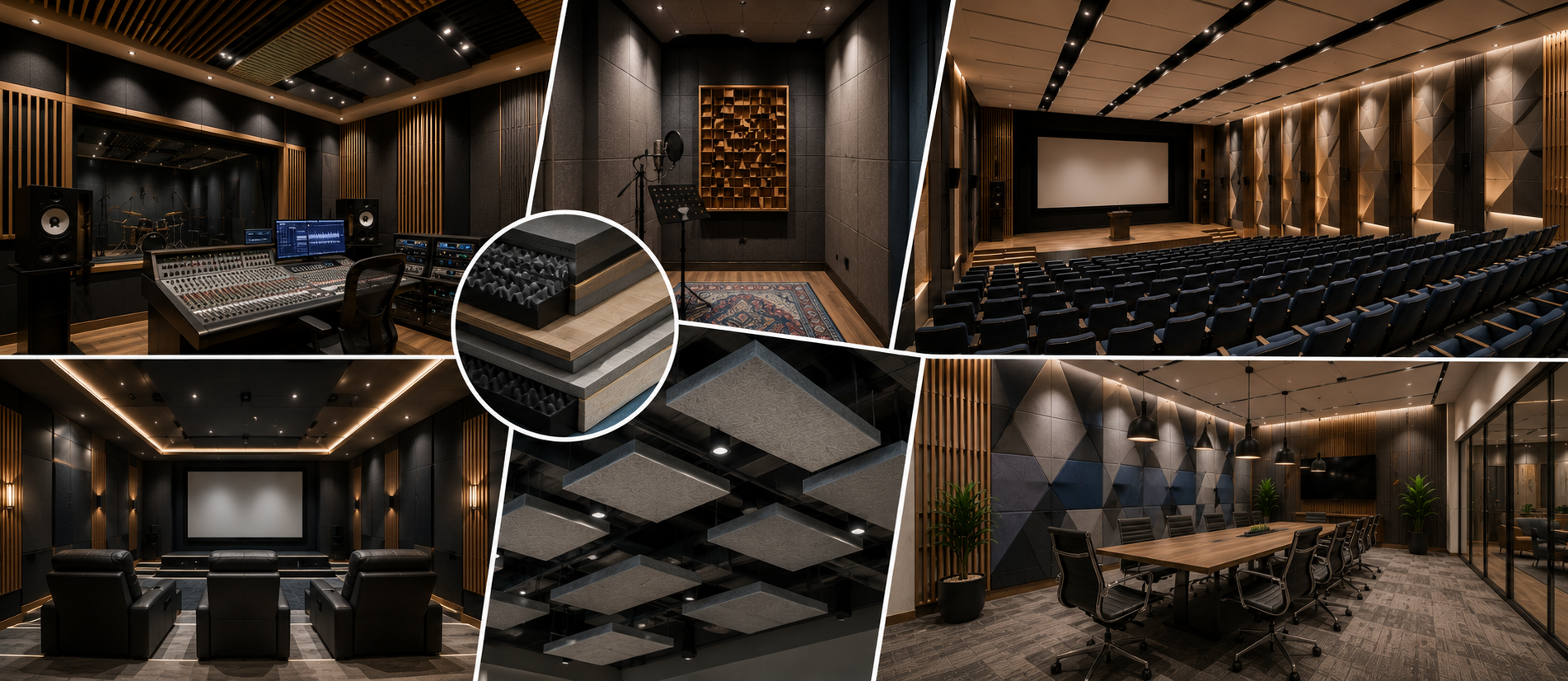
- Home Theatres: Professional acoustic design and sound isolation.
- Home Offices: Acoustics for productive remote work.
2. Commercial Acoustic Services
Supporting business success through optimal acoustic environments.
- Office Buildings: Open plan acoustics, meeting rooms, and privacy solutions.
- Retail Spaces: Noise control and acoustic comfort for shopping environments.
- Hospitality Venues: Hotels, restaurants, and event spaces.
- Healthcare Facilities: Patient privacy, healing environments, and efficient operations.
- Educational Facilities: Classrooms, lecture halls, and learning environments.
3. Performance and Entertainment Acoustics
Creating world-class acoustic environments for performance and entertainment.
- Concert Halls: Precision acoustic design for musical performances.
- Theatres: Acoustics for drama, musicals, and live events.
- Recording Studios: Professional acoustic design for audio production.
- Cinemas: Immersive acoustics for film presentations.
- Auditoriums: Multi-purpose acoustic design for diverse events.
4. Industrial Acoustic Services
Addressing acoustic challenges in industrial and manufacturing environments.
- Manufacturing Plants: Worker protection, noise compliance, and community noise control.
- Power Generation: Noise control for power plants and utilities.
- Data Centers: Managing noise from cooling systems and equipment.
- Laboratories: Quiet environments for research and testing.
- Warehouses: Noise control for logistics and distribution facilities.
5. Transportation and Infrastructure Acoustics
Comprehensive acoustic solutions for transportation projects.
- Airports: Aircraft noise management and terminal acoustics.
- Railways: Train noise control and station acoustics.
- Roadways: Traffic noise barriers and road surface treatments.
- Tunnels: Acoustic design for underground transportation.
Benefits of End-to-End Acoustic Consultation
- Comprehensive Solutions: All acoustic aspects are addressed from concept to completion.
- Early Intervention: Acoustic issues are identified and addressed early in the design process.
- Cost Efficiency: Avoiding costly retrofits and changes late in construction.
- Quality Assurance: Professional verification ensures that acoustic goals are achieved.
- Peace of Mind: Confidence that all acoustic aspects have been professionally addressed.
- Long-Term Performance: Ongoing support ensures continued acoustic quality.
- Value Enhancement: Quality acoustics add significant value to buildings and spaces.
"End-to-end acoustic consultation is an investment in quality and performance. By integrating acoustics throughout the project lifecycle, we ensure that every space achieves its full potential—creating environments that delight, inspire, and perform."
Common Scenarios Requiring Acoustic Consultation
- New Construction: Integrating acoustics into the design of new buildings.
- Renovation: Improving acoustics in existing buildings.
- Noise Complaints: Addressing specific acoustic issues or concerns.
- Regulatory Requirements: Ensuring compliance with acoustic standards.
- Performance Problems: Addressing poor acoustic performance in existing spaces.
- Design Verification: Confirming that acoustic design goals have been achieved.
- Expert Testimony: Providing expert opinions in legal or regulatory matters.
Choosing an Acoustic Consultant
Selecting the right acoustic consultant is critical for project success. Consider these factors:
- Experience: Proven track record with similar projects and applications.
- Expertise: Deep technical knowledge and understanding of acoustic principles.
- Credentials: Professional certifications and memberships in acoustic organizations.
- Services: Comprehensive services covering all aspects of acoustic design and consultation.
- Technology: Use of advanced measurement and modeling tools.
- Collaboration: Ability to work effectively with project teams and stakeholders.
- References: Satisfied clients who can attest to the consultant's capabilities.
Future Trends in Acoustic Consultation
- Digital Twin Technology: Creating virtual models of acoustic environments for analysis and optimization.
- AI-Driven Design: Using artificial intelligence to optimize acoustic design and prediction.
- Sustainable Acoustics: Eco-friendly materials and green building integration.
- Acoustic Wellness: Designing for health and well-being through sound.
- Smart Acoustic Systems: Adaptive acoustics that respond to occupancy and usage.
- Remote Consultation: Virtual acoustic analysis and consultation services.
Why Choose Ray Acoustics for End-to-End Acoustic Services
Ray Acoustics is a premier provider of end-to-end acoustic design, analysis, and consultation services in India. With decades of collective experience and a commitment to excellence, our team delivers comprehensive acoustic solutions that exceed expectations.
Our approach is holistic and collaborative. We work closely with clients, architects, engineers, and contractors to ensure that acoustics are integrated seamlessly into the project workflow. From the earliest design stages through final verification, we provide the expertise and support needed to achieve exceptional acoustic outcomes.
Our services cover the full spectrum of acoustic consultation, including:
- Acoustic Design: Comprehensive design solutions for all project types.
- Acoustic Analysis: Advanced measurement and modeling for accurate performance prediction.
- Acoustic Consultation: Expert advice and support throughout the project lifecycle.
- Sound Isolation: Professional soundproofing solutions for all applications.
- Room Acoustics: Optimizing spaces for optimal sound quality.
- Noise Control: Comprehensive strategies for managing unwanted noise.
Conclusion
End-to-end acoustic design, analysis, and consultation services are essential for creating spaces that perform at their best. From the initial concept to long-term maintenance, professional acoustic services ensure that every aspect of acoustic performance is addressed with expertise and care.
In today's competitive environment, quality acoustics are a differentiator that adds value to buildings and enhances the experience of those who use them. Whether you're building a new space, renovating an existing one, or addressing specific acoustic challenges, end-to-end acoustic services provide the comprehensive solutions you need.
At Ray Acoustics, we are dedicated to advancing the art and science of acoustic consultation. Our team of experts combines technical excellence with creative problem-solving to deliver solutions that transform spaces and exceed expectations. Contact Ray Acoustics today to discover how our end-to-end acoustic design, analysis, and consultation services can enhance your next project.