In the modern workplace, noise is one of the most significant barriers to productivity. Whether it's the hum of office equipment, the chatter of colleagues, or the sounds of traffic filtering in from outside, unwanted noise can disrupt concentration, increase stress, and reduce overall work performance. Soundproofing your office is not just about creating a quieter environment—it's about creating a space where employees can focus, collaborate effectively, and feel comfortable. This article provides practical, actionable tips for office soundproofing that can significantly boost productivity and enhance the workplace experience.
Soundproofing, also known as sound isolation, is the process of preventing sound from traveling between spaces or from entering a space. Unlike acoustic treatment, which manages sound within a room, soundproofing addresses the transmission of sound through walls, floors, ceilings, and other structural elements. Effective soundproofing requires a combination of strategies, including increasing mass, decoupling structures, adding damping materials, and sealing air leaks.
"A quiet office is a productive office. Soundproofing is an investment in your employees' focus, well-being, and performance."
Understanding Office Sound Transmission
Before implementing soundproofing measures, it's helpful to understand how sound travels in an office environment. There are two primary types of sound transmission:
- Airborne Sound: Sound that travels through the air, such as conversations, phone calls, and music. This type of sound is blocked by adding mass and sealing gaps.
- Structure-Borne Sound (Impact Noise): Sound that travels through the building structure, such as footsteps, moving furniture, and mechanical vibrations. This type of sound requires decoupling and damping to prevent transmission.
Effective office soundproofing addresses both types of transmission to create a truly quiet workspace.
Top Office Soundproofing Tips
1. Seal Air Leaks and Gaps
Sound travels through air like water through a leaky pipe. Sealing gaps around doors, windows, electrical outlets, and light fixtures is one of the most cost-effective soundproofing measures. Use acoustic caulk or sealant for gaps and cracks, and install door sweeps or weatherstripping to seal the gap between the door and the floor. Even small gaps can significantly reduce the effectiveness of other soundproofing measures.
2. Upgrade Doors and Windows
Standard hollow-core doors offer minimal sound resistance. Solid-core doors or doors with a soundproofing core can dramatically reduce sound transmission. For windows, consider using double- or triple-glazed units, which provide better sound insulation than single-pane glass. Adding acoustic window plugs or heavy drapes can further improve performance. In high-traffic or noisy areas, upgrading doors and windows is one of the most impactful soundproofing investments.
3. Install Acoustic Panels and Ceiling Tiles
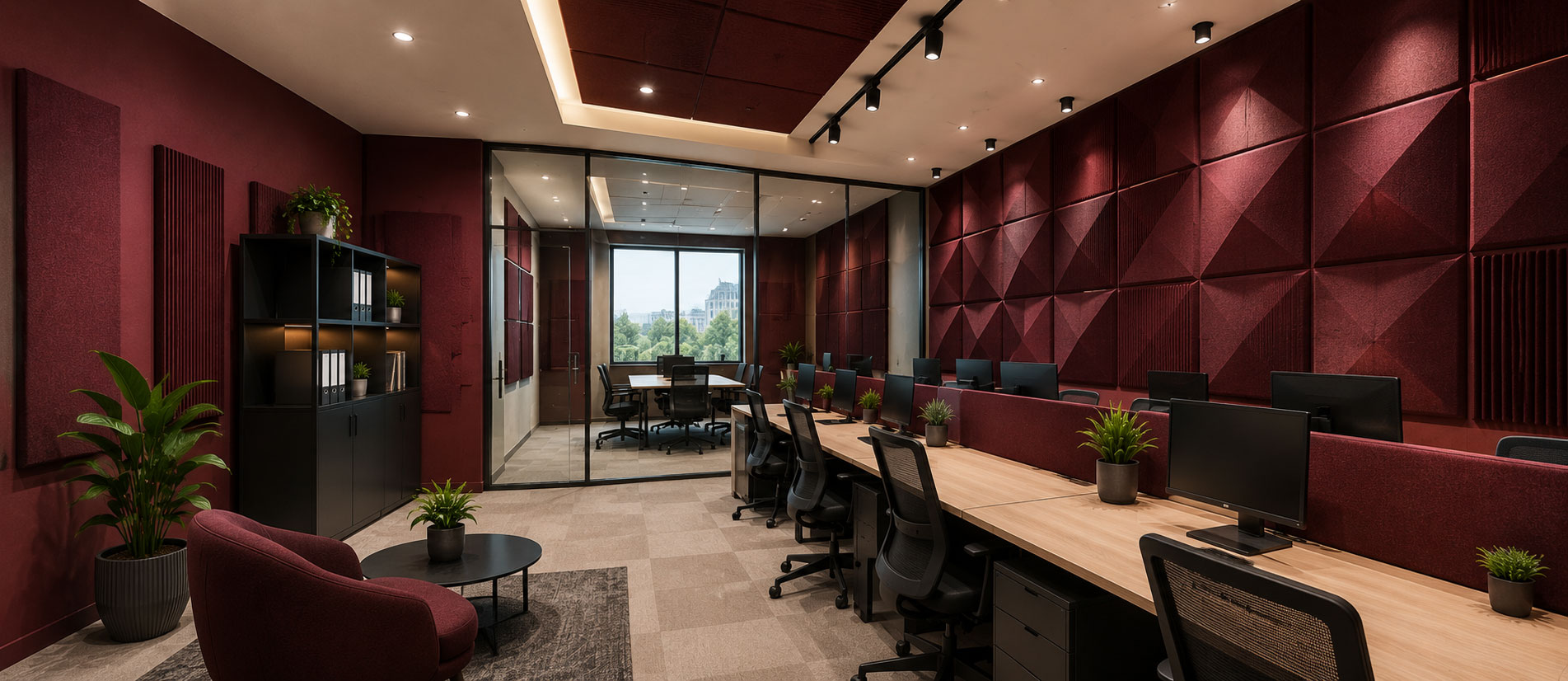
While acoustic panels are primarily for controlling sound within a room, they also contribute to soundproofing by reducing the overall noise level. In open-plan offices, ceiling tiles with high sound absorption coefficients can prevent noise from reverberating and traveling far. Suspended ceilings with acoustic tiles also provide some sound isolation between floors, especially when combined with insulation.
4. Add Mass to Walls and Ceilings
Adding mass to walls, floors, and ceilings reduces sound transmission by making it more difficult for sound waves to cause vibrations. This can be achieved by adding an extra layer of drywall (using soundproofing adhesive or Green Glue between layers), installing mass-loaded vinyl, or using soundproofing boards. For ceilings, adding insulation and a second layer of drywall with resilient channels can be effective.
5. Decouple Structural Elements
Decoupling prevents sound vibrations from traveling through the building structure. This is done by separating wall studs, using resilient channels on ceilings, or employing soundproofing clips. Decoupled walls (double-stud walls or staggered-stud construction) are highly effective for sound isolation. In existing offices, resilient channels can be added to ceilings and walls to reduce sound transmission significantly.
6. Use Soundproofing Curtains and Dividers
For offices with open layouts, soundproofing curtains and freestanding acoustic dividers can create quiet zones. These products are particularly useful for separating workstations, creating temporary meeting spaces, or reducing noise in high-traffic areas. Choose curtains with a high STC (Sound Transmission Class) rating and dividers made with sound-absorbing materials.
7. Add Carpeting and Underlayment
Hard flooring surfaces like concrete, wood, or tile transmit sound easily. Adding carpeting, acoustic underlayment, or carpet tiles can reduce both airborne and impact noise. Carpeting absorbs sound energy and provides cushioning to reduce footfall noise. For offices with existing hard floors, large area rugs or acoustic mats are a practical and cost-effective alternative.
8. Create Buffer Zones
In office planning, create buffer zones between noisy and quiet areas. For example, place conference rooms, break areas, or high-traffic corridors adjacent to noisy spaces. Use storage areas, planters, or tall furniture as acoustic barriers. Buffer zones help contain noise and prevent it from reaching focused work areas.
9. Use Sound Masking Systems
Sound masking is not traditional soundproofing, but it is a powerful complementary strategy. Sound masking systems emit a low-level, unobtrusive background sound that masks speech and other distractions. This raises the ambient noise floor, making conversations less intelligible at a distance. Sound masking can significantly improve speech privacy and reduce the perceived annoyance of noise, even when physical soundproofing is limited.
10. Optimize HVAC and Mechanical Systems
HVAC systems are often overlooked sources of noise. Implement noise control measures such as adding acoustic silencers in ductwork, using vibration isolators for equipment, and ensuring ducts are properly sized and routed to minimize airflow noise. Regular maintenance also reduces noise from aging or poorly maintained systems.
11. Install Acoustic Insulation
Insulation materials like mineral wool or fiberglass bats, when installed in wall cavities, floor joists, and ceiling cavities, provide both thermal and acoustic benefits. Acoustic insulation absorbs sound energy and prevents it from traveling through enclosed spaces. For maximum effectiveness, use insulation with high density and sound absorption coefficients.
12. Build Phone Booths and Quiet Pods
Installing prefabricated phone booths or modular quiet pods in the office provides employees with private spaces for calls, meetings, or focused work. These enclosures are often engineered with high STC ratings and include ventilation, lighting, and power outlets. They are an excellent solution for open-plan offices where privacy is limited.
13. Address Shared Walls and Floors
In multi-tenant buildings or shared office spaces, sound can pass through shared walls and floors. Work with the building management to install additional soundproofing in these areas. This might include adding mass, using acoustic panels, or applying sound-damping compounds. In some cases, constructing a new "room within a room" may be necessary for high-level isolation.
14. Use Resilient Flooring Systems
Floating floors with acoustic underlayment are excellent for isolating impact noise in multi-story offices. The floor system is decoupled from the structural slab, preventing footsteps and vibration from transmitting to the floor below. This is especially important for offices with meeting rooms or studios on upper levels.
15. Conduct an Acoustic Audit
A professional acoustic audit can identify the specific sound transmission paths and noise sources in your office. Acoustic consultants use advanced measurement tools to quantify sound levels, identify weak points, and recommend targeted solutions. An audit is the most effective way to ensure that your soundproofing investments deliver maximum results.
Soundproofing vs. Sound Absorption: What's the Difference?
It's important to distinguish between soundproofing (sound isolation) and sound absorption. Soundproofing prevents sound from entering or leaving a space, while sound absorption manages the sound inside a space. Both are often needed for an optimal acoustic environment. For example, a recording studio needs both soundproofing (to keep external noise out) and absorption (to control reverberation and reflections). In an office, soundproofing reduces distractions from adjacent spaces, while absorption improves speech intelligibility and reduces echo within the workspace.
Cost-Effective Soundproofing Solutions for Every Budget
- Low-Cost: Sealing gaps, adding bookshelves (filled with books) as sound barriers, using thick curtains, rearranging furniture, and adding plants to absorb sound.
- Mid-Range: Installing acoustic panels, soundproofing curtains, carpet tiles with underlayment, and upgrading door seals.
- High-Investment: Adding mass-loaded vinyl, constructing decoupled walls, installing soundproofed windows, and implementing sound masking systems.
Office Soundproofing for Different Office Types
Open-Plan Offices: Prioritize sound absorption (panels, ceiling clouds, carpeting), sound masking, and strategic space planning. Use acoustic dividers and phone booths to create private zones.
Private Offices and Executive Suites: Focus on sound isolation for walls, doors, and windows. Add mass to walls, use solid-core doors, and ensure air-sealing is complete.
Meeting and Conference Rooms: Soundproofing is critical to prevent confidential conversations from being overheard. Use decoupled construction, acoustical seals, and soundproofing glazing.
Co-working Spaces: A combination of sound masking, absorption, and flexible dividers is often ideal. Modular soundproofing solutions allow for reconfiguration as tenants change.
Common Soundproofing Mistakes to Avoid
- Ignoring Flanking Paths: Sound can travel around walls, through ceilings, or via ductwork. Ensure that soundproofing is comprehensive and addresses all potential paths.
- Using Only Absorption Materials: Acoustic panels alone do not soundproof. They are part of a complete solution but cannot replace mass and isolation.
- Overlooking Gaps and Holes: Even small gaps can significantly reduce the performance of soundproofing materials. Always seal air leaks.
- Inadequate Door and Window Treatment: Doors and windows are often the weakest points in soundproofing. Upgrading these elements is essential.
Case Study: Soundproofing a Chennai IT Office
Ray Acoustics was engaged by a Chennai-based IT company to address significant noise issues in their open-plan office. The office, located near a busy main road, suffered from both external traffic noise and internal sound propagation across the floor. Employee surveys revealed that 80% of staff considered noise a major distraction, impacting their concentration and productivity.
Our comprehensive solution included:
- External Soundproofing: Upgraded double-glazed windows with a higher STC rating and acoustic seals were installed on the street-facing side.
- Internal Sound Isolation: Decoupled wall systems were constructed around the boardroom and two executive offices using double-stud walls with acoustic insulation.
- Ceiling and Floor Soundproofing: Resilient channels were added to the ceiling, with acoustic insulation in the cavity. Acoustic underlayment was installed beneath new carpet tiles.
- Sound Masking: A sound masking system was installed across the open-plan area to improve speech privacy.
- Acoustic Panels: Absorptive panels were placed on walls and columns to reduce reverberation.
Post-installation testing confirmed a significant reduction in background noise and improved speech privacy. Employee feedback was overwhelmingly positive, with a 40% reported increase in concentration and a noticeable improvement in overall satisfaction.
The Role of Professional Acoustic Consultancy in Office Soundproofing
While many soundproofing measures can be implemented by internal facilities teams, complex projects benefit from professional consultancy. Acoustic consultants bring expertise in measurement, material specification, and detailed design that ensures cost-effective and reliable results. At Ray Acoustics, our team of certified acoustic engineers provides comprehensive office soundproofing services, from assessment to design, installation, and verification. We ensure that every project meets its acoustic goals while also considering aesthetics, budget, and building constraints.
Conclusion
Office soundproofing is a strategic investment that pays dividends in productivity, employee well-being, and business performance. By implementing the tips outlined in this article—from sealing air gaps and upgrading doors to using sound masking and professional auditing—you can create a workspace that supports concentration, collaboration, and comfort. Whether you are designing a new office or upgrading an existing one, soundproofing should be a key consideration in your workplace strategy.
Ray Acoustics is committed to helping businesses in Chennai and beyond achieve superior acoustic environments. Our expertise in office soundproofing ensures that your workspace is not only quieter but also more productive and enjoyable for everyone. Contact us today to schedule a consultation and discover how we can help you transform your office into a haven of focus and efficiency.