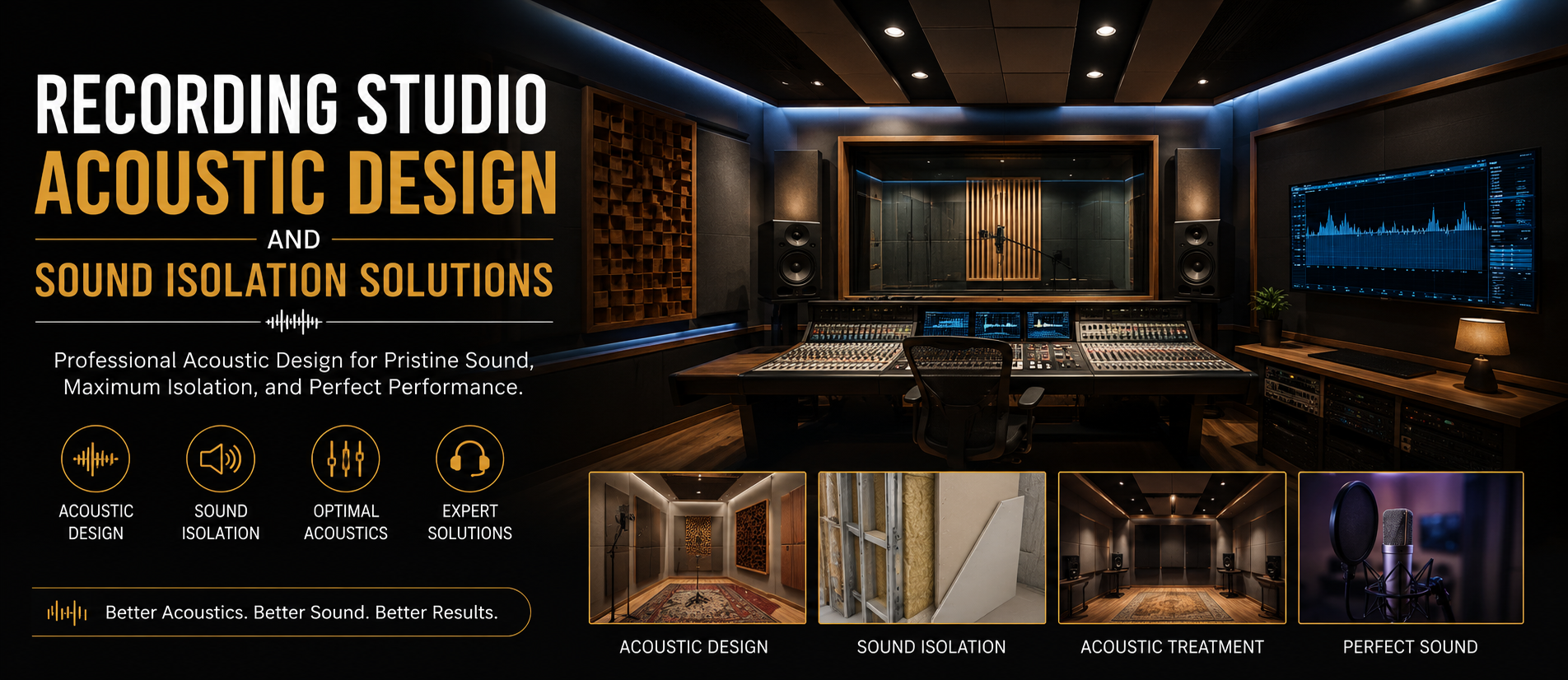
In the world of audio production, the quality of a recording is only as good as the environment in which it is captured. Recording studio acoustic design and sound isolation solutions are the foundation of professional audio production, ensuring that every note, vocal, and instrument is recorded with pristine clarity and accuracy. Whether you're building a professional recording studio, a home studio, or a podcasting space, expert acoustic design and sound isolation are essential for achieving the best possible results.
Recording studio acoustic design goes far beyond simply adding foam panels to walls. It is a comprehensive process that involves understanding the science of sound, analyzing room behavior, and implementing solutions that create a controlled, neutral listening environment. Sound isolation, on the other hand, ensures that external noise stays out and internal sound stays in, allowing for clean, uninterrupted recordings.
"The best recordings are made in spaces where the room itself is an instrument—neutral, controlled, and acoustically transparent. Professional acoustic design transforms a simple room into a world-class recording environment."
Understanding Recording Studio Acoustics
Acoustics play a crucial role in recording studios because they directly affect how sound is captured and perceived. A poorly designed room will introduce unwanted colorations, resonances, and reflections that compromise the quality of recordings. Professional acoustic design ensures that the room is acoustically neutral, allowing the recording equipment to capture sound as accurately as possible.
Key Acoustic Principles for Recording Studios
- Frequency Response: The room should have a balanced frequency response, without excessive boosts or dips in any frequency range. This ensures that recordings translate well across different playback systems.
- Reverberation Time (RT60): The time it takes for sound to decay by 60 dB in the room. Recording studios typically require relatively short RT60 times to ensure clarity and control.
- Sound Reflection Control: Managing early reflections and flutter echoes that can color the sound and create phase issues.
- Modal Control: Addressing room modes (standing waves) that cause uneven bass response at certain frequencies.
- Background Noise: Keeping the room's ambient noise level as low as possible to avoid contamination of recordings.
Components of Recording Studio Acoustic Design
1. Room Dimensions and Geometry
The dimensions and shape of a room significantly affect its acoustic properties. Professional studio designers often use specific ratios (such as the golden ratio or Bolt ratios) to ensure that room modes are distributed evenly, avoiding problematic resonances. Non-parallel walls, angled ceilings, and geometric variations can help reduce standing waves and flutter echoes.
- Control Room: Designed for critical listening, often with symmetrical geometry and well-balanced acoustics.
- Live Room: Designed for recording instruments and vocals, with acoustics that can be adjusted based on the type of sound desired.
- Isolation Booths: Small, acoustically treated rooms for isolating loud or quiet sound sources.
2. Acoustic Treatment
Acoustic treatment refers to the materials and structures used to control sound within a room. Effective treatment is essential for creating a controlled acoustic environment.
- Absorption: Acoustic panels, bass traps, and foam absorbers are used to reduce reflections and control reverberation. Different materials target different frequency ranges.
- Diffusion: Diffusers scatter sound reflections, creating a more spacious and natural acoustic while maintaining clarity. Quadratic residue diffusers (QRDs) are commonly used in studio design.
- Reflection: Hard surfaces that reflect sound can be used strategically to create desired acoustic effects, such as adding liveliness to a live room.
- Bass Traps: Specifically designed to absorb low-frequency sound energy, preventing bass buildup that can cause muddy recordings.
3. Sound Isolation (Soundproofing)
Sound isolation is the practice of preventing sound from entering or leaving a room. This is critical in recording studios to protect recordings from external noise and to prevent sound from bleeding into other rooms or disturbing neighbors.
- Mass: Adding mass to walls, floors, and ceilings with dense materials like mass-loaded vinyl, gypsum board, or concrete to block sound transmission.
- Decoupling: Separating structural elements to prevent sound from transmitting through physical contact. This includes techniques like floating floors, resilient channels, and double-wall construction.
- Damping: Using viscoelastic materials to absorb vibrational energy and reduce sound transmission through structures.
- Sealing: Preventing air leaks around doors, windows, and electrical outlets to maintain sound isolation integrity.
4. HVAC and Noise Control
Heating, ventilation, and air conditioning (HVAC) systems are a common source of background noise in studios. Acoustic design includes strategies to minimize HVAC noise, such as using sound-rated ductwork, vibration isolation mounts, and strategically placed diffusers and returns.
5. Lighting and Electrical Systems
Proper lighting and electrical design contribute to the overall functionality and comfort of the studio. Dimmer-controlled lighting, sound-isolated lighting fixtures, and dedicated electrical circuits help prevent noise and interference.
6. Monitoring and Listening Environment
The control room is where critical listening and mixing take place. Acoustic design focuses on creating a neutral listening environment where audio professionals can make accurate decisions.
- Speaker Placement: Optimal positioning of studio monitors to achieve accurate stereo imaging and frequency response.
- Listener Position: The "sweet spot" where the listener should be positioned for the most accurate sound representation.
- Acoustic Calibration: Using measurement tools and software to adjust the room's acoustics and speaker response for accuracy.
The Recording Studio Design Process
Phase 1: Consultation and Needs Assessment
The first step in studio acoustic design is understanding the client's needs, goals, and budget. This includes determining the type of studio (professional, home, project, or podcasting), the intended use, and any specific technical requirements.
- Requirements Analysis: Discussing the type of music or audio to be recorded, the number of musicians, and the required isolation.
- Space Assessment: Evaluating the available space, including dimensions, construction materials, and existing noise issues.
- Budget Planning: Aligning acoustic design and construction with the client's financial parameters.
Phase 2: Acoustic Analysis and Design
This phase involves detailed acoustic analysis of the space and the development of a comprehensive design plan.
- Room Measurements: Using professional audio measurement tools to assess the existing acoustic conditions, including frequency response, reverberation time, and noise levels.
- Acoustic Modeling: Using simulation software to model how sound will behave in the designed studio and to optimize treatment placement.
- Treatment Design: Specifying the types, locations, and quantities of acoustic treatments, including absorbers, diffusers, and bass traps.
- Sound Isolation Design: Planning the sound isolation strategy, including wall construction, flooring, and sealing details.
Phase 3: Construction and Installation
During this phase, the acoustic design is implemented with professional construction and installation.
- Structural Work: Building walls, floating floors, and other structural elements as designed.
- Acoustic Treatment Installation: Mounting panels, diffusers, and bass traps according to the design specifications.
- Electrical and HVAC: Installing sound-isolated electrical and HVAC systems to maintain acoustic integrity.
- Finishing: Applying aesthetic finishes that also consider acoustic performance.
Phase 4: Testing, Calibration, and Tuning
After construction, the studio is thoroughly tested and calibrated to ensure it meets the design goals.
- Acoustic Testing: Re-measuring the room's acoustic performance to verify that targets have been met.
- System Calibration: Adjusting speakers and monitoring systems for optimal performance.
- Fine-Tuning: Making minor adjustments to treatments or positioning based on test results.
Phase 5: Handover and Training
The final phase involves handing over the completed studio and providing training on its operation and maintenance.
- Documentation: Providing detailed documentation of the acoustic design and system setup.
- User Training: Training the studio users on proper operation and maintenance of the acoustic environment.
- Ongoing Support: Offering ongoing support for any issues or future upgrades.
Sound Isolation Techniques for Recording Studios
Sound isolation is critical for recording studios to ensure clean, noise-free recordings. Here are the key techniques used in professional studio design:
1. Mass-Law Construction
Adding mass to walls, floors, and ceilings increases their ability to block sound. Common materials include multiple layers of drywall, mass-loaded vinyl, concrete, and brick. The more mass, the better the isolation, especially for low frequencies.
2. Decoupling
Decoupling separates structural elements to prevent sound from traveling through direct contact. This can be achieved with:
- Resilient Channels: Metal channels that separate drywall from wall studs, reducing sound transmission.
- Double-Wall Construction: Building two separate walls with an air gap between them for superior isolation.
- Floating Floors: Using specialized materials and construction to isolate the studio floor from the building structure.
- Isolated Ceilings: Using resilient hangers or separate ceiling framing to prevent sound from traveling through ceilings.
3. Damping
Damping materials convert vibrational energy into heat, reducing sound transmission through structures. Common damping materials include viscoelastic compounds and acoustic caulk.
4. Sealing and Airtightness
Sound travels easily through air gaps. Sealing doors, windows, electrical outlets, and other penetrations is essential for maintaining acoustic isolation. Acoustic seals, gaskets, and caulking are used to achieve an airtight seal.
5. Sound Locks
Sound locks are vestibules with double doors that create an airlock between the studio and the outside. They prevent sound from escaping when doors are opened and help maintain a controlled acoustic environment.
6. Window Design
Observation windows between control rooms and live rooms must be acoustically rated. This typically involves using multiple layers of glass with different thicknesses and angles to prevent reflections and maintain isolation.
Acoustic Treatment for Recording Studios
Acoustic treatment controls the internal sound of the room, ensuring that recordings are accurate and free from unwanted coloration.
1. Absorption Panels
Absorption panels reduce reflections and control reverberation. They come in various materials and thicknesses, each targeting different frequency ranges. Acoustic foam, mineral wool, and fiberglass are common materials.
- Broadband Panels: Cover a wide frequency range for general reflection control.
- Bass Traps: Specifically designed to absorb low-frequency sound in corners and areas where bass builds up.
- Helmholtz Resonators: Tunable absorbers that target specific problematic frequencies.
2. Diffusers
Diffusers scatter sound reflections, preserving energy while reducing echo and phase issues. They create a more balanced and natural acoustic environment. Quadratic residue diffusers (QRDs) and skyline diffusers are common in studio design.
3. Ceiling and Floor Treatments
Ceilings and floors play a significant role in studio acoustics. Cloud panels suspended from ceilings absorb reflections and control reverberation. Carpet or specialized acoustic flooring can reduce floor reflections and control sound transmission.
4. Adjustable Acoustics
Many studios use adjustable acoustic elements that can be repositioned to adapt to different recording situations. Movable panels, curtains, and baffles allow for flexibility in the live room.
Types of Recording Studios and Their Acoustic Needs
1. Professional Recording Studios
Large commercial studios with dedicated control rooms, live rooms, and isolation booths. Acoustic design is highly specialized, with precise dimensions, extensive treatment, and custom-built sound isolation. These studios are designed for the highest quality audio production.
2. Project Studios
Smaller studios often found in homes or offices, typically used for recording and mixing by independent producers and musicians. Acoustic design focuses on creating a balanced, controlled environment that can accommodate various recording tasks.
3. Home Studios
Personal studios set up in residences. Acoustic design must consider practical limitations, such as space constraints and noise intrusion. Solutions may include modular treatments, bass traps, and isolation solutions tailored to a smaller scale.
4. Podcasting Studios
Purpose-built spaces for podcast production, focusing on voice clarity and isolation. Acoustic design typically includes vocal booths or small rooms with heavy absorption to ensure clear, dry recordings.
5. Post-Production and Mixing Studios
Studios focused on mixing and editing recorded material. Acoustic design is critical for accurate monitoring and sound evaluation, with a strong emphasis on controlled listening environments.
Choosing a Studio Acoustic Designer
Selecting the right acoustic designer or consultant is essential for the success of your studio project. Here are key considerations:
- Experience: Look for designers with a proven track record in recording studio design, with a portfolio of completed projects.
- Technical Knowledge: They should have deep knowledge of acoustic physics, building construction, and audio technology.
- Design Approach: The designer should work collaboratively with you, understanding your creative and technical needs.
- Use of Technology: They should use modern measurement and modeling tools for accurate design and implementation.
- References: Ask for references from previous clients to gauge satisfaction and quality of work.
- Budget Alignment: The designer should offer solutions that meet your goals within your budget.
"A recording studio is the artist's sanctuary—a space where creativity and technology come together. Expert acoustic design creates a canvas that is both inspiring and technically flawless."
Common Acoustic Issues in Recording Studios
1. Standing Waves and Room Modes
Room modes create uneven bass response that can make recordings sound boomy or thin. Bass traps and proper room geometry help mitigate these issues.
2. Flutter Echo
A rapid, repeating echo caused by parallel walls. Diffusers and absorption panels break up these reflections to eliminate flutter echo.
3. Background Noise
External noise from traffic, HVAC, or other sources can ruin recordings. Sound isolation techniques are essential for keeping background noise below acceptable levels.
4. Poor Sound Isolation
Sound bleeding between rooms or to the outside can disrupt recordings and cause leakage. Comprehensive isolation solutions are necessary to prevent this.
5. Inaccurate Monitoring
If the control room's acoustics are not neutral, mixing decisions will be compromised. Acoustic treatment and proper monitoring calibration are essential.
Cost Considerations for Recording Studio Acoustics
The cost of acoustic design and construction varies widely based on the type of studio, size, and level of complexity.
- Consultation and Design: Fees for acoustic design services typically range from ₹50,000 to ₹5,00,000+ depending on the scope and expertise.
- Acoustic Treatment: Costs for panels, diffusers, and bass traps vary based on materials and quantity. A small home studio might spend ₹30,000-₹1,00,000, while a professional studio could invest ₹5,00,000-₹20,00,000+.
- Sound Isolation Construction: Structural work for isolation can be the most significant expense, ranging from ₹2,00,000 for basic isolation to ₹20,00,000+ for high-performance construction.
- Electrical and HVAC: Specialized electrical and HVAC systems add to the total cost, often in the range of ₹1,00,000-₹5,00,000.
- Total Project Cost: A home studio might cost ₹2,00,000-₹10,00,000, while a professional facility can exceed ₹50,00,000.
Future Trends in Studio Acoustic Design
- Virtual Acoustics: Using algorithms to modify room acoustics electronically, allowing for multiple acoustic presets in a single space.
- Modular Systems: Pre-engineered acoustic solutions that can be installed quickly and easily.
- Sustainable Materials: Eco-friendly acoustic materials made from recycled or natural sources.
- Immersive Audio: Design for formats like Dolby Atmos and other immersive audio technologies, requiring specialized speaker layouts and acoustics.
- Hybrid Studios: Spaces designed for both music recording and multimedia content creation, with flexible acoustic designs.
Conclusion
Recording studio acoustic design and sound isolation are the cornerstones of professional audio production. Whether you're building a world-class recording facility or a personal home studio, investing in expert acoustic design ensures that your recordings achieve the clarity, accuracy, and quality that artists and audiences demand.
At Ray Acoustics, we specialize in creating bespoke recording studio environments that combine technical excellence with creative vision. Our team of experienced acoustic designers uses the latest tools and techniques to analyze, design, and implement solutions that transform spaces into exceptional recording environments.
From controlled live rooms to accurate control rooms, from isolation booths to vocal booths, we are committed to helping audio professionals realize their creative potential. Contact Ray Acoustics today to discover how our recording studio acoustic design and sound isolation solutions can elevate your production capabilities to the highest level.