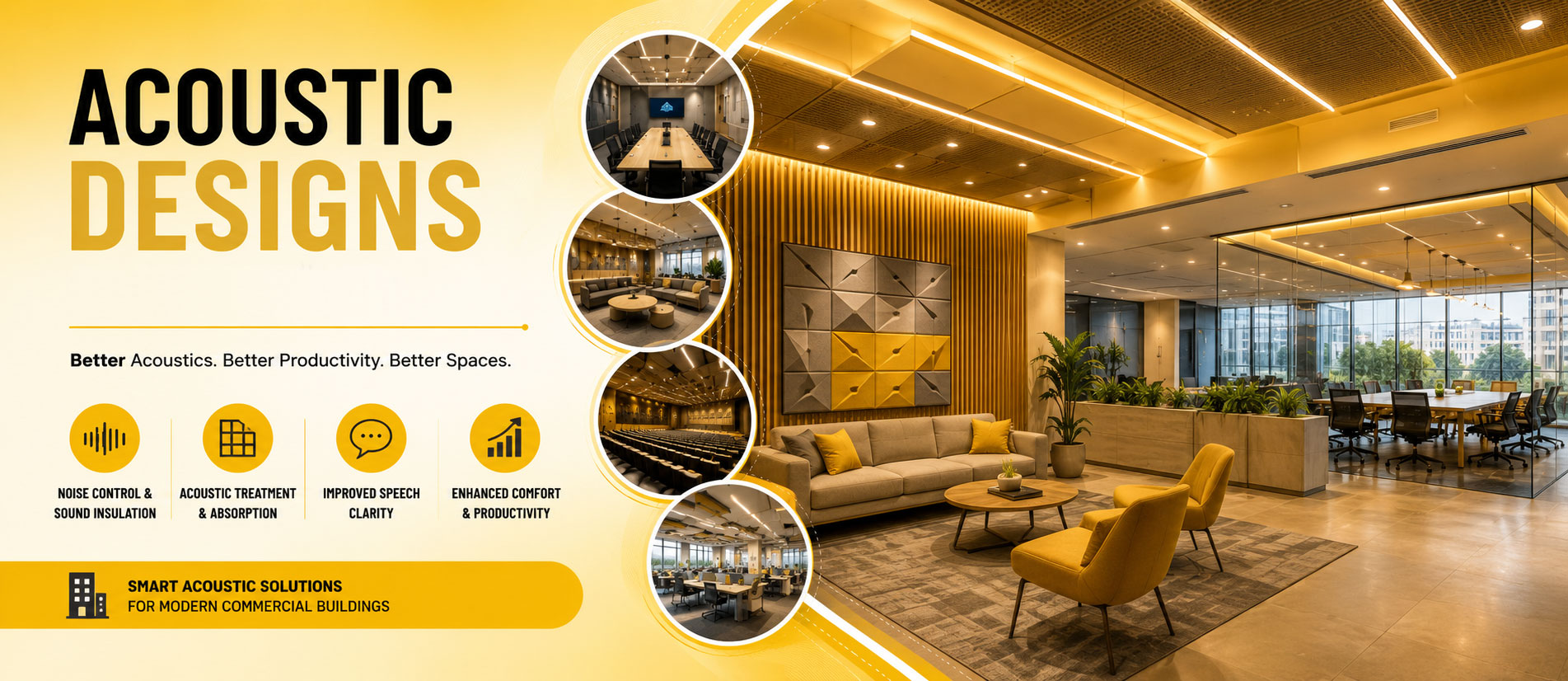
In today's fast-paced commercial environment, the design of a building goes far beyond aesthetics. Acoustic design has emerged as a critical component for creating functional, comfortable, and productive spaces. From open-plan offices and co-working hubs to retail stores and healthcare facilities, the acoustic environment significantly impacts occupant well-being, communication, and overall business success. Investing in professional acoustic design for commercial buildings is no longer a luxury—it's a strategic necessity.
Acoustic design refers to the science and art of controlling sound within a built environment. It involves managing noise levels, optimizing speech clarity, reducing distractions, and enhancing the overall auditory experience. Effective acoustic design considers everything from building materials and room geometry to sound isolation and absorption, ensuring that a space performs as intended for its specific use.
"Commercial spaces that prioritize acoustic design create environments where people can focus, collaborate, and thrive—driving productivity and business success."
Key Benefits of Acoustic Design for Commercial Buildings
1. Enhanced Employee Productivity
Noise distractions are one of the leading causes of reduced productivity in commercial settings. Open-plan offices, in particular, are notorious for high noise levels from conversations, phone calls, and equipment. Acoustic design mitigates these distractions by reducing background noise and reverberation. When employees can concentrate without constant interruptions, their efficiency and output improve significantly. Studies have shown that poor acoustics can decrease productivity by up to 66%, making acoustic design a smart investment for any business.
2. Improved Communication and Collaboration
Clear communication is the cornerstone of effective teamwork. Acoustic design ensures that speech intelligibility is high, allowing conversations to be heard and understood without strain. In meeting rooms, boardrooms, and collaborative areas, good acoustics facilitate smoother discussions, better decision-making, and more productive brainstorming sessions. By reducing background noise and echo, acoustic design fosters an environment where ideas can flow freely.
3. Health and Well-being
Excessive noise is not just an annoyance; it can have serious health implications. Chronic exposure to high noise levels can lead to stress, fatigue, elevated blood pressure, and even hearing loss. Acoustic design helps create quieter, more peaceful environments that promote mental well-being and reduce stress. In commercial buildings, where employees spend a significant portion of their day, a calm auditory environment contributes to overall job satisfaction and employee retention.
4. Increased Property Value and Appeal
Buildings with superior acoustics are more attractive to potential tenants and buyers. In a competitive real estate market, high-quality acoustic design sets a property apart, adding to its market value. Commercial spaces that offer a comfortable and quiet environment are in high demand, as businesses recognize the importance of acoustics for productivity and employee happiness. Investing in acoustic design can therefore yield a strong return on investment.
5. Regulatory Compliance and Standards
Many industries and jurisdictions have specific acoustic regulations and standards. For example, healthcare facilities must meet strict noise level requirements to ensure patient healing and confidentiality. Educational institutions need to comply with standards that promote effective learning. Acoustic design ensures that commercial buildings meet these legal and regulatory requirements, avoiding penalties and ensuring a safe, compliant environment.
6. Enhanced Customer Experience
In retail, hospitality, and service-oriented spaces, the acoustic environment greatly influences customer perception and satisfaction. A noisy, chaotic environment can deter customers, while a well-balanced acoustic space creates a welcoming and enjoyable atmosphere. In restaurants, for instance, good acoustics allow patrons to converse comfortably, improving their dining experience and increasing the likelihood of return visits.
7. Energy Efficiency and Sustainability
Effective acoustic design often overlaps with sustainable building practices. Materials used for acoustic absorption, such as recycled wood fiber, cork, and mineral wool, also provide thermal insulation, reducing heating and cooling costs. Additionally, acoustic design that minimizes the need for sound masking systems can lower energy consumption. By integrating acoustic and energy-efficient strategies, businesses can achieve both environmental and financial benefits.
8. Better Privacy and Confidentiality
In commercial buildings, sensitive conversations often occur in offices, meeting rooms, and healthcare consulting areas. Acoustic design ensures that speech is contained within a room, preventing it from being overheard by unintended listeners. This is particularly important in legal, financial, and medical settings where confidentiality is paramount. Sound isolation techniques, such as acoustic partitions and double-glazed windows, protect privacy and build trust with clients.
9. Reduced Noise-Related Absenteeism
High noise levels are a known contributor to stress and health issues, leading to increased absenteeism. By creating a quieter, more comfortable environment, acoustic design can reduce stress-related illnesses and lower sick leave rates. This translates to higher overall workforce productivity and lower healthcare costs for employers.
10. Future-Proofing the Building
As work styles evolve, commercial buildings must adapt to new uses and technologies. Acoustic design that is flexible and scalable ensures that a space can accommodate changing needs, such as the integration of hybrid work models or advanced audio-visual systems. A well-designed acoustic environment is a long-term asset that supports a building's relevance and functionality for years to come.
Acoustic Design Applications in Commercial Buildings
1. Office Buildings: Acoustic design creates productive work environments through sound absorption, strategic partitioning, and noise reduction. Solutions include acoustic ceilings, wall panels, carpeting, and space planning.
2. Healthcare Facilities: Hospitals, clinics, and dental practices benefit from acoustic design that reduces stress, enhances privacy, and improves communication between patients and staff. Sound masking systems and acoustic partitions are commonly used.
3. Educational Institutions: In schools, colleges, and training centers, good acoustics are essential for effective learning. Acoustic design minimizes background noise and ensures clear speech transmission in classrooms and lecture halls.
4. Retail and Hospitality: Stores, restaurants, hotels, and malls use acoustic design to create inviting environments that encourage customer engagement and comfort. Absorptive materials, quiet HVAC systems, and thoughtful layout design are key.
5. Corporate Conference and Event Spaces: Meeting rooms, auditoriums, and convention centers require precise acoustic design to ensure clear presentations, seamless audio-visual integration, and audience comfort.
6. Commercial Buildings with Mixed Uses: Many modern commercial buildings combine office, retail, and residential spaces. Acoustic design ensures that noise from one area does not intrude on another, providing comfort for all occupants.
Components of Effective Acoustic Design
1. Sound Absorption: Acoustic panels, ceiling tiles, carpets, and fabrics absorb sound energy, reducing reverberation and background noise. Absorption materials are selected based on the specific acoustic needs of a space.
2. Sound Isolation: Techniques such as double walls, resilient channels, and acoustic seals prevent sound transmission between rooms and from external sources. Isolation is critical for privacy and noise control.
3. Sound Masking: In open-plan offices, sound masking systems emit a low-level background noise to mask speech and other distractions, making the environment more comfortable and confidential.
4. Room Geometry and Layout: The shape and size of a room, along with the placement of furniture and fixtures, affect how sound behaves. Acoustic design optimizes these elements to achieve the desired acoustic performance.
5. Building Services Integration: HVAC systems, plumbing, and electrical equipment can generate noise. Acoustic design ensures that these systems are quiet and do not interfere with the acoustic comfort of the space.
Choosing the Right Acoustic Design Partner
1. Expertise and Track Record: Look for acoustic consultants and designers with proven experience in commercial projects. A portfolio of successful projects demonstrates their capability and reliability.
2. Comprehensive Services: A good acoustic design partner offers a full spectrum of services, from initial analysis and conceptual design to implementation and post-installation testing. This ensures a seamless and effective process.
3. Use of Advanced Tools: Modern acoustic design relies on sophisticated software and measurement equipment for accurate modeling and analysis. Ensure your partner uses the latest tools to deliver precision and quality.
4. Collaborative Approach: Acoustic design often intersects with architecture, interior design, and building services. A collaborative partner who works closely with all stakeholders ensures integrated and cost-effective solutions.
5. Focus on Sustainability: Choose a partner who prioritizes sustainable materials and practices, aligning acoustic design with broader environmental goals.
6. Client-Centered Solutions: A good acoustic design partner listens to your needs and tailors solutions to your specific requirements, budget, and aesthetic preferences.
Acoustic Design for Commercial Buildings in Chennai
Chennai, a dynamic hub for technology, healthcare, and commerce, is witnessing a growing demand for superior acoustic design in commercial buildings. From the IT parks of Perungudi to the corporate campuses of OMR and the healthcare centers of Nungambakkam, businesses are recognizing the value of professional acoustic design. Ray Acoustics is at the forefront of this trend, providing cutting-edge acoustic solutions that enhance commercial spaces across the city.
1. IT and Tech Parks: Chennai's thriving IT sector requires office spaces that support high concentration and collaboration. Acoustic design in these environments boosts productivity and employee satisfaction.
2. Healthcare Facilities: With a growing healthcare industry, acoustic design is essential for creating healing environments that reduce patient stress and improve staff efficiency.
3. Retail and Hospitality: Chennai's vibrant retail and hospitality sectors are leveraging acoustic design to create memorable customer experiences that foster loyalty and repeat business.
4. Co-working Spaces: The rise of co-working spaces in areas like Guindy and T. Nagar has increased the need for flexible acoustic solutions that cater to diverse users and activities.
5. Educational Institutions: From IIT Madras to numerous colleges and schools, educational institutions in Chennai are investing in acoustic design to enhance learning outcomes.
Conclusion
The benefits of acoustic design for commercial buildings are undeniable. From boosting productivity and improving communication to enhancing well-being and property value, good acoustics are a key driver of business success. In a world where the built environment plays a crucial role in human experience, investing in professional acoustic design is an investment in the future of your commercial space.
At Ray Acoustics, we specialize in creating acoustic environments that transform commercial buildings into places where people can work, connect, and thrive. Our team of experienced consultants uses cutting-edge tools and techniques to deliver tailored solutions that meet the unique needs of each client. Whether you are developing a new office, renovating a healthcare facility, or designing a retail space, we are committed to helping you achieve the highest standards of acoustic performance.
Contact Ray Acoustics today to explore how our acoustic design services can elevate your commercial building to new levels of comfort, productivity, and success.