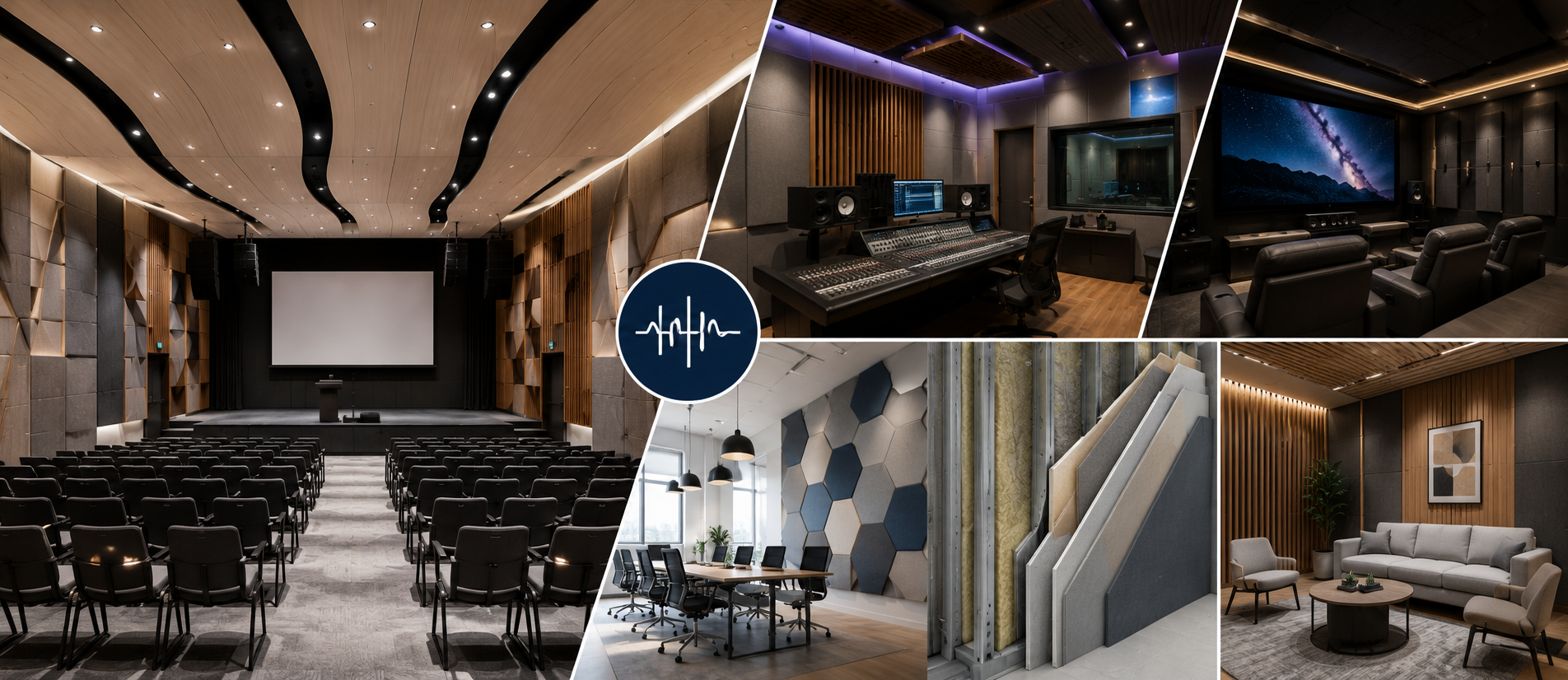
Architectural acoustics and soundproofing solutions are fundamental to creating spaces that are comfortable, functional, and conducive to their intended purpose. Whether it's a quiet office, a peaceful bedroom, a vibrant restaurant, or a world-class concert hall, the way sound behaves in a space profoundly affects how people experience it. Architectural acoustics is the science and art of designing spaces with optimal sound characteristics, while soundproofing focuses on preventing unwanted sound from entering or leaving a space.
In today's increasingly noisy world, the importance of good architectural acoustics cannot be overstated. From reducing stress and improving productivity to enhancing communication and entertainment, effective acoustic design and soundproofing solutions contribute to the quality of life and the success of any building project.
"Architectural acoustics is the invisible art that shapes how we experience buildings. Great design considers not just how a space looks, but how it sounds—creating environments that are both beautiful and functional."
Understanding Architectural Acoustics
Architectural acoustics is the study and practice of controlling sound within buildings. It encompasses three main areas:
- Sound Isolation (Soundproofing): Preventing sound from transmitting between spaces or from outside sources.
- Room Acoustics: Controlling how sound behaves within a space, including reverberation, clarity, and sound quality.
- Noise Control: Managing unwanted noise from mechanical systems, equipment, and external sources.
Effective architectural acoustics requires a holistic approach that considers the entire building—from its structural design and materials to its finishes and systems. Professional acoustic consultants work alongside architects, engineers, and builders to integrate acoustic solutions seamlessly into the design and construction process.
Key Principles of Architectural Acoustics
1. Sound Transmission and Isolation
Sound travels through structures via two primary mechanisms: airborne sound and structure-borne sound.
- Airborne Sound: Sound waves that travel through the air, such as voices, music, and television audio. Isolation requires sealing air gaps and using mass to block transmission.
- Structure-Borne Sound: Sound that travels through building structures, such as footsteps, mechanical vibrations, and impacts. Isolation requires decoupling and damping to prevent vibration transmission.
Sound Transmission Class (STC) ratings measure a building element's ability to block airborne sound, while Impact Insulation Class (IIC) ratings measure performance against impact noise.
2. Absorption and Reverberation
Reverberation is the persistence of sound in a space after the source stops. The amount of reverberation is determined by the room's volume and the absorbency of its surfaces.
- Absorption: Acoustic materials absorb sound energy, reducing reflections and reverberation. Common absorptive materials include acoustic panels, carpets, and ceiling tiles.
- Reverberation Time (RT60): The time it takes for sound to decay by 60 decibels. Different spaces require different RT60 times for optimal acoustics.
3. Reflection and Diffusion
Sound reflections contribute to the sense of space and envelopment in a room. Controlled reflections can enhance sound quality, while uncontrolled reflections can cause echoes and reduce clarity.
- Reflection: Hard surfaces reflect sound, which can be desirable for creating liveliness in spaces like concert halls.
- Diffusion: Diffusing surfaces scatter reflections, creating a more balanced acoustic environment without causing distinct echoes.
4. Background Noise and Environmental Control
Background noise from HVAC systems, external traffic, and building equipment can detract from the intended acoustic environment. Managing background noise is essential for creating comfortable, functional spaces.
- Noise Criteria (NC) Ratings: Standards that measure acceptable background noise levels in different building types.
- Mechanical Noise Control: Using silencers, vibration isolation, and proper duct design to reduce HVAC noise.
Soundproofing Solutions: Types and Techniques
1. Mass-Based Soundproofing
Adding mass to building elements is one of the most effective ways to block sound transmission. Heavier materials are more difficult for sound waves to penetrate.
- Mass Loaded Vinyl (MLV): A dense, flexible material that adds mass to walls, floors, and ceilings.
- Double Drywall: Multiple layers of gypsum board with damping compounds between them.
- Concrete and Masonry: High-density materials that provide excellent sound isolation.
- Acoustic Glazing: Laminated or double/triple-pane windows with acoustic interlayers.
2. Decoupling
Decoupling separates structural elements to prevent sound from traveling through direct physical connections.
- Resilient Channels: Metal channels that separate drywall from studs, reducing vibration transmission.
- Staggered Stud Walls: Two independent wall frames separated by an air gap.
- Floating Floors: Separating the finished floor from the structural slab using resilient materials.
- Isolated Ceilings: Using resilient hangers or independent ceiling framing.
3. Damping
Damping materials convert vibrational energy into heat, reducing sound transmission through structures.
- Viscoelastic Compounds: Materials like Green Glue that are applied between layers of drywall.
- Acoustic Caulking: Flexible sealants used to fill gaps and provide damping.
- Constrained Layer Damping: Composite materials that dissipate vibrational energy.
4. Sealing and Airtightness
Sound travels easily through air leaks. Proper sealing is essential for effective soundproofing.
- Acoustic Sealants: Flexible, paintable sealants for filling gaps and cracks.
- Door Seals: Perimeter gaskets and automatic door bottoms that seal against air movement.
- Acoustic Putty Pads: Materials used to seal electrical outlets and penetrations.
- Weatherstripping: Sealing windows and doors to prevent sound leakage.
5. Sound Locks and Vestibules
Sound locks create an airlock between spaces, reducing sound transmission when doors are opened.
- Double Door Entry: Two doors with a small vestibule between them.
- Acoustic Curtains: Sound-absorbing curtains for temporary or flexible isolation.
Acoustic Treatment for Interior Spaces
While soundproofing prevents sound from traveling between spaces, acoustic treatment controls how sound behaves within a space. Both are essential for creating optimal acoustic environments.
1. Absorptive Treatments
Absorptive materials reduce reflections and control reverberation, improving speech intelligibility and sound clarity.
- Acoustic Panels: Fabric-wrapped panels available in various sizes, colors, and patterns for both performance and aesthetics.
- Ceiling Clouds: Suspended absorptive panels that control ceiling reflections.
- Carpet and Rugs: Floor coverings that absorb sound, particularly effective for reducing footfall noise.
- Acoustic Foam: Lightweight, porous materials for general absorption.
- Perforated Wood Panels: Absorptive panels with wood finishes for more architectural integration.
2. Diffusive Treatments
Diffusers scatter sound reflections, preserving energy while avoiding distinct echoes. They create a more natural and spacious acoustic environment.
- Quadratic Residue Diffusers (QRDs): Precision-engineered diffusers with deep wells that scatter sound in a predictable pattern.
- Skyline Diffusers: Two-dimensional diffusers that scatter sound in all directions.
- Diffusive Wood Panels: Architectural diffusers that blend with interior design.
3. Bass Traps
Low-frequency sound is the most difficult to manage. Bass traps are specifically designed to absorb low-frequency energy, reducing standing waves and bass buildup.
- Corner Bass Traps: Triangular traps placed in room corners where low-frequency pressure builds up.
- Membrane Traps: Absorbers that use flexible membranes to capture low-frequency energy.
- Helmholtz Resonators: Tuned absorbers that target specific problem frequencies.
Architectural Acoustics for Different Building Types
1. Residential Acoustics
In homes, acoustic design focuses on comfort, privacy, and tranquility. Key considerations include:
- Sound Isolation: Preventing noise between rooms and from external sources.
- Quiet Spaces: Creating bedrooms, home offices, and relaxation areas with low noise levels.
- Entertainment Spaces: Home theatres and media rooms with optimized acoustics.
- Multifamily Buildings: Meeting STC and IIC requirements for shared wall and floor construction.
2. Commercial and Office Acoustics
In workplaces, good acoustics enhance productivity, communication, and employee well-being.
- Open Plan Offices: Managing noise distractions and ensuring speech privacy.
- Meeting Rooms: Designing for clear communication and video conferencing.
- Private Offices: Providing quiet spaces for focused work.
- Co-working Spaces: Balancing collaboration areas with quieter zones.
3. Educational Acoustics
Learning environments require clear speech and minimal noise distractions.
- Classrooms: Ensuring teachers can be heard clearly by all students.
- Lecture Halls: Acoustically designed for speech intelligibility and presentation quality.
- Libraries: Quiet spaces for study and concentration.
- Music Rooms: Specialized acoustics for music education and practice.
4. Healthcare Acoustics
In healthcare facilities, acoustics affect patient recovery, staff efficiency, and communication.
- Patient Rooms: Quiet environments that promote rest and healing.
- Nurses' Stations: Controlled acoustic environments for efficient communication.
- Waiting Areas: Reducing stress through comfortable acoustic design.
- Diagnostic Spaces: Specialized acoustics for medical equipment and consultation.
5. Hospitality Acoustics
Hotels, restaurants, and event spaces require acoustics that enhance guest experience.
- Guest Rooms: Sound isolation for comfortable sleep and privacy.
- Restaurants: Balanced acoustics that allow conversation without excessive noise.
- Meeting Spaces: Flexible acoustics for various event types.
- Lobbies and Public Areas: Welcoming acoustic environments.
6. Performance Venues
Concert halls, theaters, and auditoriums require world-class acoustics.
- Concert Halls: Acoustically tuned for music performance with appropriate reverberation and envelopment.
- Theaters: Speech clarity and sound reinforcement for theatrical productions.
- Multi-Purpose Venues: Adjustable acoustics for different event types.
- Recording Studios: Controlled acoustics for professional audio production.
The Soundproofing Design Process
Phase 1: Assessment and Analysis
Understanding the acoustic challenges and opportunities of the space.
- Noise Survey: Measuring existing noise levels and identifying sources.
- Acoustic Analysis: Evaluating room acoustics and potential issues.
- Regulatory Requirements: Understanding building codes and acoustic standards.
- Client Needs: Identifying specific acoustic goals and priorities.
Phase 2: Design and Specification
Developing a comprehensive acoustic design plan.
- Acoustic Modeling: Using simulation software to predict acoustic performance.
- Material Selection: Choosing appropriate acoustic materials and systems.
- System Specification: Detailing construction requirements and installation methods.
- Integration: Coordinating acoustics with architectural, mechanical, and electrical design.
Phase 3: Implementation
Overseeing construction and installation of acoustic systems.
- Construction Oversight: Ensuring acoustic design is implemented correctly.
- Quality Control: Testing and verification during construction.
- Installation: Professional installation of acoustic treatments.
Phase 4: Testing and Verification
Confirming that acoustic goals have been achieved.
- Acoustic Testing: Measuring sound isolation, reverberation time, and background noise levels.
- Compliance Verification: Ensuring regulatory and performance requirements are met.
- Fine-Tuning: Making adjustments to achieve optimal results.
Soundproofing Materials and Systems
Here's a comparison of common soundproofing materials and their typical applications:
| Material/System | Primary Function | STC Rating | Typical Applications |
|---|---|---|---|
| Mass Loaded Vinyl | Adds mass to walls and floors | STC 25-30 | Walls, floors, ceilings |
| Double Drywall with Damping | High-mass, damped wall system | STC 50-65 | Studios, theatres, offices |
| Staggered Stud Walls | Decoupled wall construction | STC 55-70 | High-isolation applications |
| Resilient Channels | Decoupling drywall from structure | STC 45-55 | Residential and commercial |
| Acoustic Caulking | Sealing gaps and damping | N/A | All construction types |
| Floating Floor Systems | Floor isolation | IIC 45-70 | Multifamily, studios |
| Acoustic Glazing | Window sound isolation | STC 35-55 | Windows, doors |
Benefits of Professional Architectural Acoustics
- Enhanced Comfort: Quiet, comfortable spaces that reduce stress and improve well-being.
- Improved Productivity: Work environments that support focus and concentration.
- Better Communication: Clear speech and audio for meetings, education, and entertainment.
- Property Value: Well-designed acoustics add significant value to buildings.
- Regulatory Compliance: Meeting building codes and acoustic standards.
- Energy Efficiency: Integrated design that balances acoustics and energy performance.
- Long-Term Satisfaction: Spaces that remain comfortable and functional for years.
"Good architecture is invisible, and great acoustics are silent. Professional acoustic design creates spaces that feel right—where sound enhances the experience without ever being noticed."
Common Acoustic Issues and Solutions
1. Excessive Noise from HVAC
Issue: Mechanical system noise disturbs occupants and reduces speech intelligibility.
Solutions: Proper duct sizing, acoustically-lined ductwork, vibration isolation for equipment, silencers, and strategic placement of diffusers and returns.
2. Poor Speech Privacy
Issue: Conversations are audible in adjacent spaces, compromising privacy.
Solutions: Sound isolation construction, sound masking systems, acoustic sealing, and acoustic panels to reduce ambient noise.
3. Echo and Reverberation Issues
Issue: Excessive reverberation and echoes make speech difficult to understand.
Solutions: Acoustic panels, sound-absorbing ceiling tiles, carpets, and other absorptive treatments to control reflections.
4. Impact Noise
Issue: Footsteps, moving furniture, and other impacts create noise in rooms below.
Solutions: Acoustic underlayment, resilient floor systems, carpet, and floating floors.
5. External Noise Intrusion
Issue: Traffic, construction, and other external sounds disrupt interior spaces.
Solutions: High-performance glazing, exterior wall soundproofing, and acoustic sealing at penetration points.
Future Trends in Architectural Acoustics
- Sustainable Acoustics: Eco-friendly acoustic materials made from recycled and natural products.
- Active Acoustics: Electronic systems that adapt to the acoustic environment in real-time.
- Parametric Design: Algorithm-driven acoustic design for performance optimization.
- Acoustic Wellness: Designing for mental health and well-being through sound.
- Smart Building Integration: Acoustic systems integrated with building automation and IoT.
- Blended Acoustics: Combining architectural and product-based solutions for comprehensive performance.
Why Choose Ray Acoustics for Architectural Acoustics
Ray Acoustics is a leading provider of architectural acoustics and soundproofing solutions in India. Our team of experienced consultants and designers combines technical expertise with creative vision to deliver acoustic environments that exceed expectations.
Our approach is comprehensive and collaborative. We work closely with architects, engineers, and clients from the earliest stages of design through construction and occupancy, ensuring that every acoustic detail is addressed.
From luxury residences and corporate offices to educational institutions and performance venues, Ray Acoustics has the experience and expertise to create spaces that sound as good as they look.
Conclusion
Architectural acoustics and soundproofing solutions are essential for creating buildings that are comfortable, functional, and successful. Whether you're building a new home, designing an office, or renovating an existing space, professional acoustic design ensures that your investment delivers the performance you deserve.
At Ray Acoustics, we are dedicated to advancing the science and art of architectural acoustics. Our team of experts uses the latest tools and techniques to analyze, design, and implement acoustic solutions that transform spaces into environments of exceptional quality.
From sound isolation and noise control to room acoustics and acoustic treatment, we provide comprehensive solutions tailored to each client's unique needs. Contact Ray Acoustics today to discover how our architectural acoustics and soundproofing solutions can enhance your next building project.