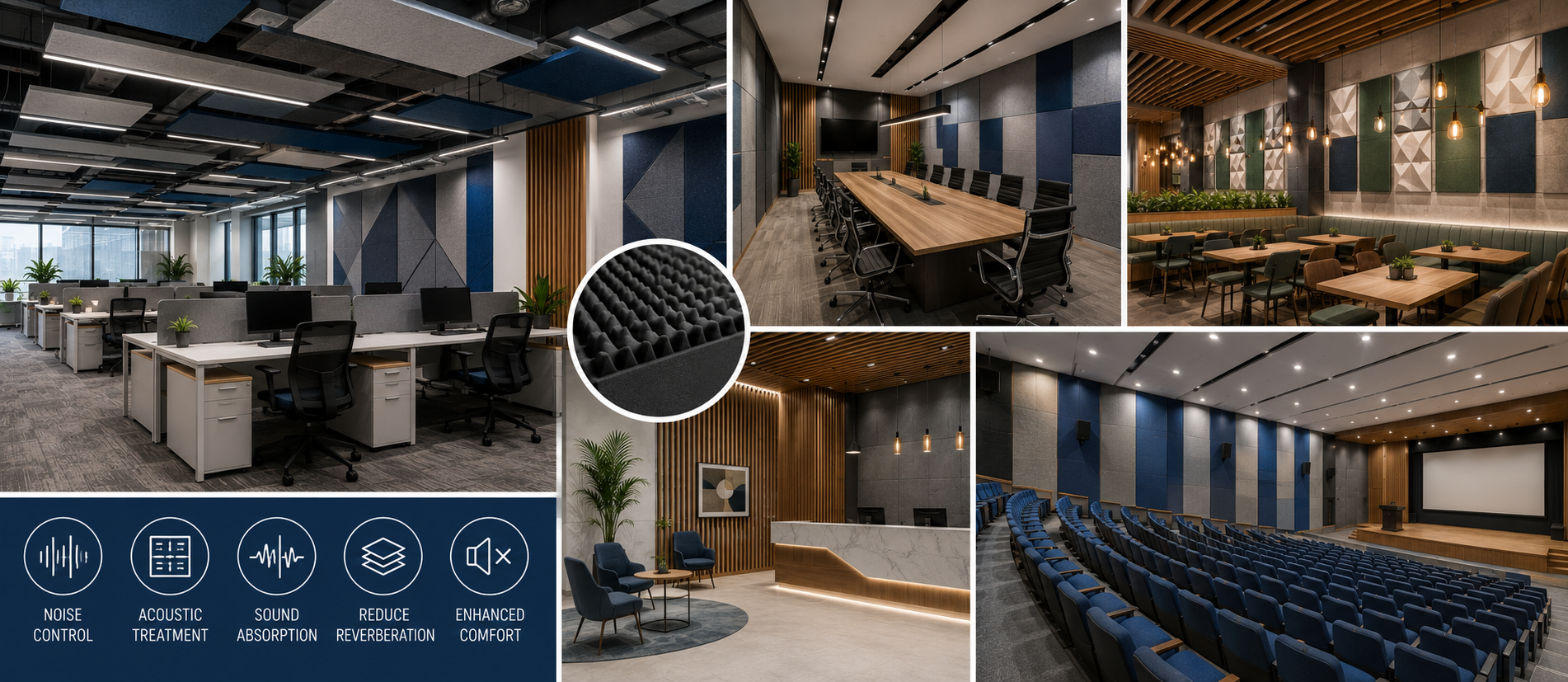
In today's competitive business environment, the quality of the commercial space directly impacts customer experience, employee productivity, and overall business success. Noise control and acoustic treatment for commercial spaces have emerged as critical considerations for businesses across all sectors—from bustling restaurants and retail stores to quiet offices and healthcare facilities. Professional acoustic solutions transform commercial environments into comfortable, functional, and welcoming spaces that enhance both customer satisfaction and operational efficiency.
Commercial spaces face unique acoustic challenges. The combination of hard surfaces, high ceilings, and dense occupancy often creates noisy environments where sound bounces uncontrollably. This not only diminishes the customer experience but also affects employee well-being, communication, and productivity. Effective noise control and acoustic treatment address these challenges, creating environments that work for everyone who uses them.
"In commercial spaces, acoustics are not a luxury—they are a necessity. Good acoustic design creates environments where customers feel comfortable, employees are productive, and businesses thrive."
Understanding Commercial Acoustic Challenges
Commercial spaces present a unique set of acoustic challenges that require specialized solutions. Understanding these challenges is the first step toward creating effective acoustic environments.
Common Acoustic Issues in Commercial Spaces
- Excessive Reverberation: Sound that lingers too long, making speech difficult to understand and creating a chaotic auditory environment.
- Noise Pollution: Unwanted sound from HVAC systems, equipment, traffic, and other sources that disrupts comfort and communication.
- Poor Speech Privacy: Conversations that are audible to unintended listeners, compromising confidentiality and causing distractions.
- Sound Transmission: Noise that travels between different areas of the building, such as from a restaurant kitchen to the dining area.
- Echo and Flutter Echo: Distinct echoes caused by parallel hard surfaces that create disorienting auditory experiences.
The Impact of Poor Acoustics on Business
- Reduced Productivity: Employees in noisy environments are less focused and less efficient, leading to decreased output.
- Poor Customer Experience: Excessive noise in retail and hospitality spaces drives customers away and reduces satisfaction.
- Communication Breakdowns: In meeting rooms and offices, poor acoustics lead to misunderstandings and inefficiencies.
- Health and Well-being: Chronic noise exposure contributes to stress, fatigue, and health problems among employees.
- Staff Retention: Uncomfortable acoustic environments contribute to employee dissatisfaction and turnover.
Acoustic Treatment Solutions for Commercial Spaces
Professional acoustic treatment addresses both the technical and experiential aspects of commercial acoustics. The following solutions are commonly employed in commercial environments:
1. Acoustic Ceiling Treatments
Ceilings are often the largest un-treated surface in commercial spaces. Acoustic ceiling treatments are among the most effective solutions for controlling sound.
- Acoustic Ceiling Tiles: Mineral fiber and fiberglass tiles with high Noise Reduction Coefficient (NRC) ratings for general absorption.
- Ceiling Clouds: Suspended acoustic panels that provide absorption while adding architectural interest.
- Baffles and Banners: Vertical acoustic panels that hang from ceilings, ideal for spaces with exposed structures.
- Stretched Fabric Systems: Tensioned fabric ceilings with acoustic backing for seamless, modern aesthetics.
- Perforated Metal Ceilings: Durable solutions with acoustic backing for industrial and contemporary spaces.
2. Acoustic Wall Treatments
Wall surfaces provide ample opportunity for acoustic treatment that can be both functional and visually appealing.
- Acoustic Panels: Fabric-wrapped panels in various sizes, colors, and configurations for absorption and aesthetic enhancement.
- Wood Slat Panels: Linear wood systems with acoustic backing that combine natural aesthetics with sound absorption.
- Acoustic Wallpaper: Textured wallpapers with sound-absorbing properties for subtle acoustic treatment.
- Perforated Wood Panels: Architectural panels with acoustic performance and warm aesthetic appeal.
- 3D Acoustic Panels: Sculptural panels that provide both absorption and visual interest.
3. Flooring Acoustic Solutions
Floor treatments address both impact noise and sound absorption in commercial spaces.
- Acoustic Underlayment: Underlayment materials that provide impact insulation and sound absorption for hard flooring surfaces.
- Carpet and Carpet Tiles: Textile floor coverings with acoustic backing for absorption and comfort.
- Acoustic Floor Mats: Sound-absorbing mats suitable for high-traffic areas and standing workstations.
- Composite Flooring: Hard flooring systems with integrated acoustic layers.
4. Sound Isolation Systems
Preventing sound transmission between spaces is essential for privacy and comfort.
- Soundproof Partitions: Acoustic wall systems with high STC ratings for separating spaces.
- Acoustic Doors: Sound-rated doors with seals for effective isolation.
- Acoustic Glazing: Laminated and multi-pane windows for sound isolation.
- Sound Locks: Vestibules with double doors for high-isolation applications.
5. Sound Masking Systems
Sound masking (also known as white noise) systems add low-level background sound to reduce the intelligibility of conversations and mask distracting noises.
- Underfloor Systems: Speakers installed in ceiling or underfloor spaces.
- Direct-Field Systems: Ceiling-mounted speakers that project sound downward.
- Networked Systems: Smart masking systems with zone control and monitoring.
Acoustic Solutions for Specific Commercial Sectors
1. Office and Corporate Spaces
Offices require acoustics that support both collaboration and concentration. Key solutions include:
- Open Plan Office Acoustics: Combining absorptive ceiling clouds, acoustic screens, and sound masking to manage noise.
- Private Office Isolation: Soundproof walls and doors for confidential work.
- Meeting Room Acoustics: Acoustic treatment for clear communication and video conferencing.
- Phone Booth and Pods: Pre-fabricated acoustic pods for private calls and focused work.
- Break Areas: Acoustically designed spaces for relaxation and social interaction.
2. Restaurants and Hospitality
In restaurants and hospitality venues, acoustics affect customer comfort, dining experience, and operational efficiency.
- Dining Room Acoustics: Balancing absorption and sound quality to create intimate dining experiences.
- Kitchen Noise Control: Isolating kitchen noise from dining areas using acoustic barriers and equipment isolation.
- Bar Acoustics: Creating lively yet comfortable acoustic environments in bar areas.
- Private Dining Rooms: Acoustically treated spaces for private events and meetings.
- Lobby Acoustics: Welcoming acoustic environments that set the tone for the guest experience.
3. Retail and Shopping Environments
Retail spaces require acoustics that enhance the shopping experience and support communication.
- Open Sales Floor Acoustics: Managing reverberation for clear PA announcements and music.
- Fitting Rooms: Soundproofing for customer privacy.
- Atrium Acoustics: High-ceiling spaces with acoustic treatment to prevent echoes.
- Mall Common Areas: Managing noise from crowds, fountains, and other sources.
4. Healthcare Facilities
Healthcare environments require acoustics that support healing, privacy, and efficient operations.
- Patient Room Isolation: Soundproofing for patient privacy and rest.
- Corridor Acoustics: Managing noise from traffic and equipment.
- Nurses' Stations: Acoustic design for communication and comfort.
- Waiting Areas: Noise control for comfort and stress reduction.
- Consultation Rooms: Sound isolation for patient confidentiality.
5. Educational and Training Facilities
Educational spaces require acoustics that support learning and communication.
- Classroom Acoustics: Speech clarity and noise control for effective teaching.
- Lecture Halls: Acoustic design for large-group instruction and presentations.
- Training Rooms: Flexible acoustic solutions for various training formats.
- Libraries: Quiet acoustic environments for study and concentration.
- Corridor and Common Areas: Managing noise between learning spaces.
6. Fitness and Wellness Centers
Fitness facilities require specialized acoustic solutions to manage high noise levels from equipment and classes.
- Gym Floor Acoustics: Absorbing impact and equipment noise.
- Class Studio Acoustics: Controlled acoustics for music-based classes.
- Yoga/Meditation Spaces: Quiet, peaceful acoustic environments.
- Pool Areas: Moisture-resistant acoustic solutions for high-humidity environments.
7. Conference and Event Venues
Event venues require acoustics that support a range of activities from presentations to entertainment.
- Ballroom Acoustics: Flexible acoustics for banquets, presentations, and entertainment.
- Meeting Room Acoustics: Clear communication for business meetings.
- Exhibition Hall Acoustics: Managing noise from large crowds and activities.
- Breakout Rooms: Acoustically treated spaces for small group discussions.
The Commercial Acoustic Design Process
Phase 1: Acoustic Assessment
Understanding the current acoustic conditions and identifying opportunities for improvement.
- Noise Measurement: Quantifying background noise levels and identifying sources.
- Reverberation Measurement: Measuring reverberation time to assess room acoustics.
- Sound Isolation Testing: Assessing sound transmission between spaces.
- Occupant Feedback: Understanding how users experience the acoustic environment.
Phase 2: Solution Development
Developing comprehensive acoustic solutions tailored to the specific space and business needs.
- Acoustic Modeling: Using software to predict the effectiveness of proposed treatments.
- Material Selection: Choosing appropriate acoustic materials for performance and aesthetics.
- System Design: Developing detailed specifications for installation.
- Integration Planning: Coordinating acoustics with other building systems.
Phase 3: Implementation
Professional installation with quality control and verification.
- Installation Supervision: Ensuring that treatments are installed correctly.
- Quality Assurance: Testing during installation to verify performance.
- Final Verification: Post-installation testing to confirm achievement of acoustic goals.
Phase 4: Post-Installation Support
Ongoing support and maintenance for long-term acoustic performance.
- System Maintenance: Regular checks and maintenance of acoustic systems.
- Performance Monitoring: Periodic testing to ensure continued performance.
- Upgrade Support: Advising on future upgrades and modifications.
Acoustic Material Selection Guide
Choosing the right acoustic materials is critical for successful commercial acoustic design. Here's a guide to selecting materials based on performance requirements:
| Material Type | NRC Rating | STC Rating | Best Applications | Aesthetic Options |
|---|---|---|---|---|
| Acoustic Ceiling Tiles | 0.70-0.95 | N/A | Offices, schools, healthcare | Wide range of finishes |
| Fabric-Wrapped Panels | 0.80-1.00 | N/A | All commercial spaces | Custom colors, shapes |
| Wood Acoustic Panels | 0.60-0.90 | N/A | Corporate, hospitality, retail | Wood veneers, finishes |
| Acoustic Wood Slats | 0.60-0.85 | N/A | Corporate, hospitality | Linear wood systems |
| Acoustic Underlayment | N/A | IIC 60-75 | Multifamily, offices | Hidden under flooring |
| Sound Masking System | N/A | N/A | Open plan offices | Hidden in ceiling |
| Acoustic Glazing | N/A | 35-55 | Windows, doors | Clear, tinted, laminated |
Benefits of Professional Commercial Acoustics
- Enhanced Customer Experience: Comfortable acoustic environments that keep customers coming back.
- Improved Employee Productivity: Quiet, focused workspaces increase efficiency and job satisfaction.
- Better Communication: Clear speech and audio in meetings and presentations.
- Regulatory Compliance: Meeting acoustic requirements and building codes.
- Brand Reputation: Quality acoustic design enhances brand perception.
- Operational Efficiency: Well-designed acoustics support efficient business operations.
- Property Value: Acoustic quality is increasingly recognized as a valuable building asset.
"In commercial design, acoustics are the new lighting—a critical element that defines the experience. Professional acoustic treatment transforms ordinary commercial spaces into extraordinary environments that attract, retain, and inspire."
Common Commercial Acoustic Mistakes to Avoid
- Ignoring Acoustics Until the End: Acoustic considerations should be integrated from the earliest design stages.
- Using Inadequate Materials: Too little absorption or incorrect materials won't achieve desired results.
- Neglecting Background Noise: HVAC and equipment noise must be addressed for optimal acoustics.
- Inconsistent Treatment: Acoustic treatment should be comprehensive and consistent throughout the space.
- Focusing Only on Absorption: A balanced approach including absorption, diffusion, and isolation is essential.
- Overlooking Maintenance: Acoustic materials require proper maintenance for long-term performance.
Future Trends in Commercial Acoustics
- Biophilic Acoustic Design: Integrating natural materials and patterns into acoustic solutions.
- Smart Acoustic Systems: Adaptive acoustics that respond to occupancy and usage patterns.
- Acoustic Wellness: Designing for health and well-being through sound management.
- Sustainable Acoustics: Eco-friendly materials and sustainable manufacturing processes.
- Multi-Functional Spaces: Acoustic solutions for flexible, adaptable commercial spaces.
- Integrated Technology: Combining acoustics with smart building technology and IoT.
Why Choose Ray Acoustics for Commercial Acoustics
Ray Acoustics is a premier provider of noise control and acoustic treatment solutions for commercial spaces in India. With extensive experience across diverse commercial sectors, our team delivers innovative, effective, and aesthetically pleasing acoustic solutions that enhance business environments.
Our approach combines technical excellence with creative design, ensuring that acoustic solutions complement rather than compromise the interior design. We work closely with architects, interior designers, and business owners to create acoustic environments that support business objectives and enhance user experience.
From concept through completion, Ray Acoustics provides comprehensive commercial acoustic services, including assessment, design, installation, and ongoing support. Our commitment to quality and customer satisfaction has made us a trusted partner for businesses across India.
Conclusion
Noise control and acoustic treatment are essential investments for commercial spaces of all types. Professional acoustic design creates environments where customers feel comfortable, employees are productive, and businesses succeed. In today's competitive marketplace, acoustic quality is a differentiator that can set your business apart.
At Ray Acoustics, we are dedicated to helping businesses achieve exceptional acoustic environments. Our team of experts combines technical expertise with creative vision to deliver solutions that enhance comfort, communication, and brand experience. Contact Ray Acoustics today to discover how our commercial acoustic solutions can transform your business space.