Introduction: Why Gym Acoustics Matter in Tambaram
A fitness centre is an energetic environment where music, instructor communication, exercise equipment and group activity happen at the same time. When sound is not managed properly, music can become overwhelming, instructions may be difficult to hear and conversations can be tiring. Thoughtful gym acoustic design in Tambaram helps create a more controlled sound environment without removing the lively atmosphere that members expect.
Gyms and fitness studios have different acoustic needs depending on their activities. A strength-training floor may have dropped weights and moving equipment, while a group-class studio may rely on amplified music and spoken instructions. Cardio zones, reception areas and changing spaces also have different sound requirements. The design should respond to each zone rather than treating the entire facility as one identical room.
Effective gym acoustics balance energy and comfort: music should be
engaging, coaching should remain clear and unnecessary sound build-up
should be controlled.
Common Noise Sources in Fitness Centres
A gym can contain several simultaneous sound sources. Loudspeakers produce music and announcements, while treadmills, cycles and other machines generate operational noise. Weight training introduces impact sounds from plates, dumbbells and equipment contacting the floor. People talking, instructors calling out guidance and air conditioning add to the overall acoustic environment.
The combined effect depends on room size, ceiling height, surface finishes, equipment layout and the number of people using the facility. Hard floors, exposed concrete and large glass areas may reflect sound and increase reverberation. As activity levels rise, this can make the gym feel louder and reduce the clarity of spoken instructions.
Controlling Music and Improving Instructor Communication
Music is an important part of many workout experiences, particularly in group exercise and functional training sessions. However, simply increasing speaker volume is not always the best way to make music audible throughout a room. Poor speaker placement and strong room reflections can create uneven sound levels, with some areas receiving excessive volume while others remain difficult to hear.
Acoustic planning should consider the room layout, speaker locations, listening areas and the positions where instructors communicate. Absorptive ceiling or wall treatments can help reduce excessive reflections. The sound system should be configured by suitable audio professionals so that coverage and volume are appropriate for the space and its activities.
Managing Impact Noise from Weights and Exercise Equipment
Free-weight areas can produce short, high-energy impact sounds when weights are placed on racks or dropped onto training surfaces. These sounds may disturb other zones within the gym and can also travel through the building structure to neighbouring rooms or properties. This is not the same problem as reverberation within the workout area.
Depending on the equipment and building construction, suitable measures may include purpose-designed resilient flooring, weight-drop platforms, equipment isolation and careful planning of training zones. The floor build-up and structural loading must be considered before selecting a system. Surface mats alone should not be assumed to provide complete sound isolation from the structure.
Reducing Reverberation in Large Workout Areas
Large open gyms often contain reflective ceilings and walls, with relatively few soft furnishings to absorb sound. Reflections can persist after music, speech or equipment noise stops, causing the overall sound level to build up during busy periods. This can affect comfort and make announcements harder to understand.
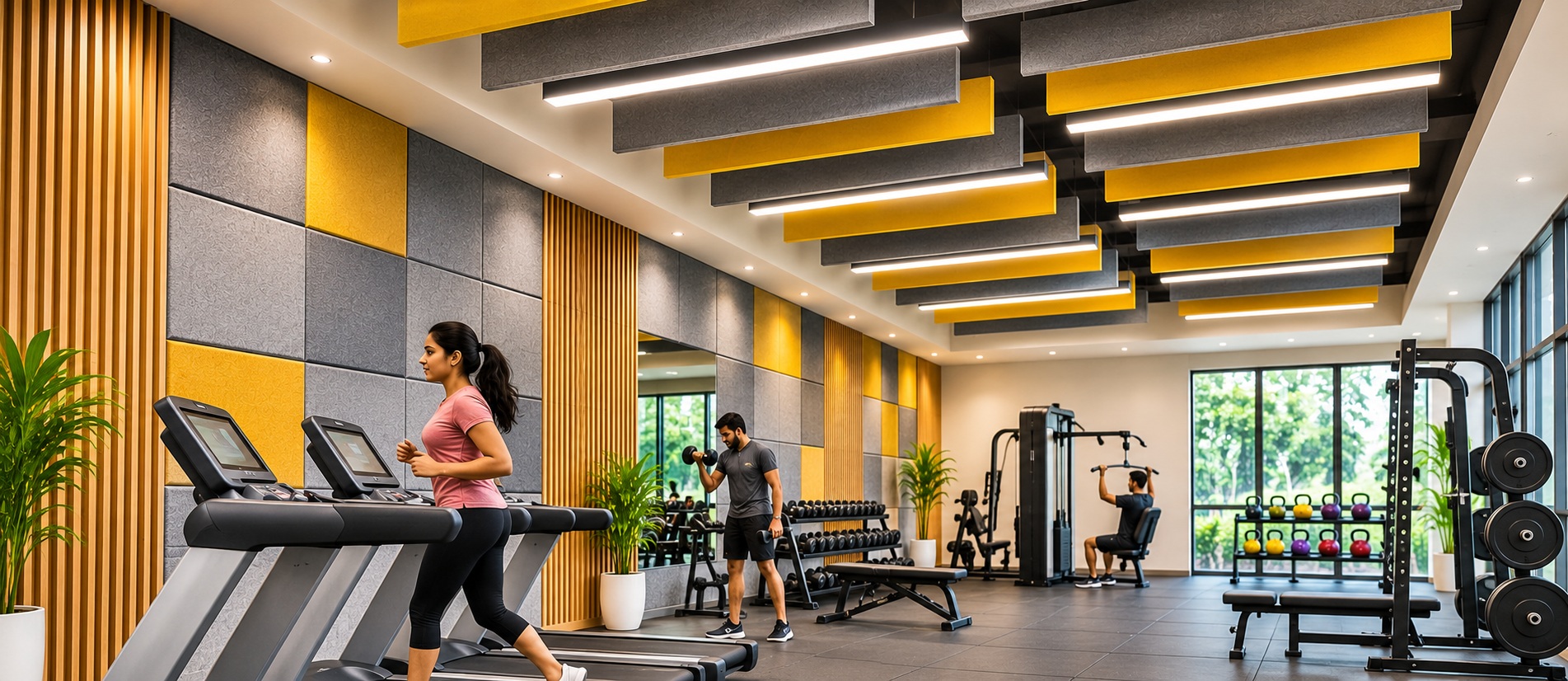
Acoustic ceiling panels, suspended baffles, clouds and wall absorbers may be considered where they are compatible with the interior and operating conditions. Placement should account for lighting, sprinklers, ventilation, ceiling height, cleaning and maintenance access. Products should be selected for the required acoustic performance as well as durability and suitability for a fitness environment.
Acoustic Zoning for Different Gym Activities
Separating activities into suitable zones can reduce conflicts between sound sources. For example, a group-class studio with amplified music may need a different approach from a quiet stretching or recovery area. Strength and cardio zones may also benefit from considered equipment placement and separation from reception or consultation spaces.
- Group exercise studios: Manage reverberation and support even sound coverage for music and instructor speech.
- Strength-training zones: Consider impact-resistant flooring systems and equipment placement.
- Cardio areas: Review machine noise, spacing and the combined effect of multiple operating units.
- Reception and consultation areas: Support clear conversations away from high-activity zones.
- Yoga and recovery rooms: Aim for a calmer acoustic environment with controlled background noise.
HVAC and Mechanical Noise in Gyms
Fitness centres need adequate ventilation and cooling, but fans, air-handling units, ducts and other mechanical equipment can introduce continuous background noise. If the sound is prominent, it may interfere with instruction, music and conversation. Vibration transmitted through equipment supports or building elements can create an additional issue.
The source and transmission route should be identified before selecting a control measure. Depending on the installation, solutions may involve vibration isolation, duct silencers, acoustic lining, equipment enclosures or adjustments to the system. Any work must preserve required airflow, access, fire safety and equipment performance.
Choosing Suitable Acoustic Materials
Materials used in a gym must meet practical requirements as well as acoustic goals. They may need to withstand regular cleaning, humidity, accidental contact and the operating conditions of the facility. Their location should also avoid obstructing equipment, circulation routes, emergency provisions or essential building services.
The selection process can consider absorption performance, mounting method, impact resistance, cleanability, fire characteristics and maintenance requirements. A combination of ceiling treatment, selected wall absorbers and purpose-designed floor systems may be appropriate, but the specification should follow a site-specific assessment.
What an Acoustic Assessment Should Review
Before recommending a gym acoustic solution in Tambaram, the assessment should establish how the facility operates and which sound concerns are most important. Depending on the project, the review may include:
- Room dimensions, ceiling height and construction details
- Activity zones, occupancy patterns and operating hours
- Music system layout, speaker positions and instructor locations
- Noise from cardio machines, weights and other equipment
- Reverberation and speech clarity in occupied conditions
- Vibration and sound transmission to adjoining spaces
- HVAC noise, ventilation needs and building-service constraints
- Cleaning, durability, safety and interior design requirements
These observations help distinguish between internal reverberation, equipment noise, impact transmission and sound leakage. Each requires a different response, so identifying the main issue prevents spending on treatments that do not solve the underlying problem.
Gym Acoustic Design by Ray Acoustics
Ray Acoustics provides acoustic design and noise-control solutions for commercial and specialised interiors. For a fitness centre, the design may involve reverberation control, acoustic ceiling systems, wall treatments, equipment-noise considerations, impact-noise strategies and coordination with building services.
Each facility has its own layout, activity mix and construction constraints. A project-specific approach for a gym in Tambaram should begin with the operator's priorities, the sound sources and the needs of members and staff. The proposed measures can then be coordinated with the equipment plan and interior fit-out.
Conclusion
Good gym acoustics help create a workout environment where music remains controlled, instructions are understandable and equipment noise does not dominate the space. Fitness centres in Tambaram can benefit from a design that considers activity zoning, reverberation, impact noise, mechanical systems and the building's sound-isolation requirements.
If you are planning a new fitness centre or upgrading an existing one, gym acoustic design in Tambaram should be based on the actual activities, room conditions and noise concerns. A focused assessment can guide the selection and placement of suitable acoustic treatments and noise-control measures.