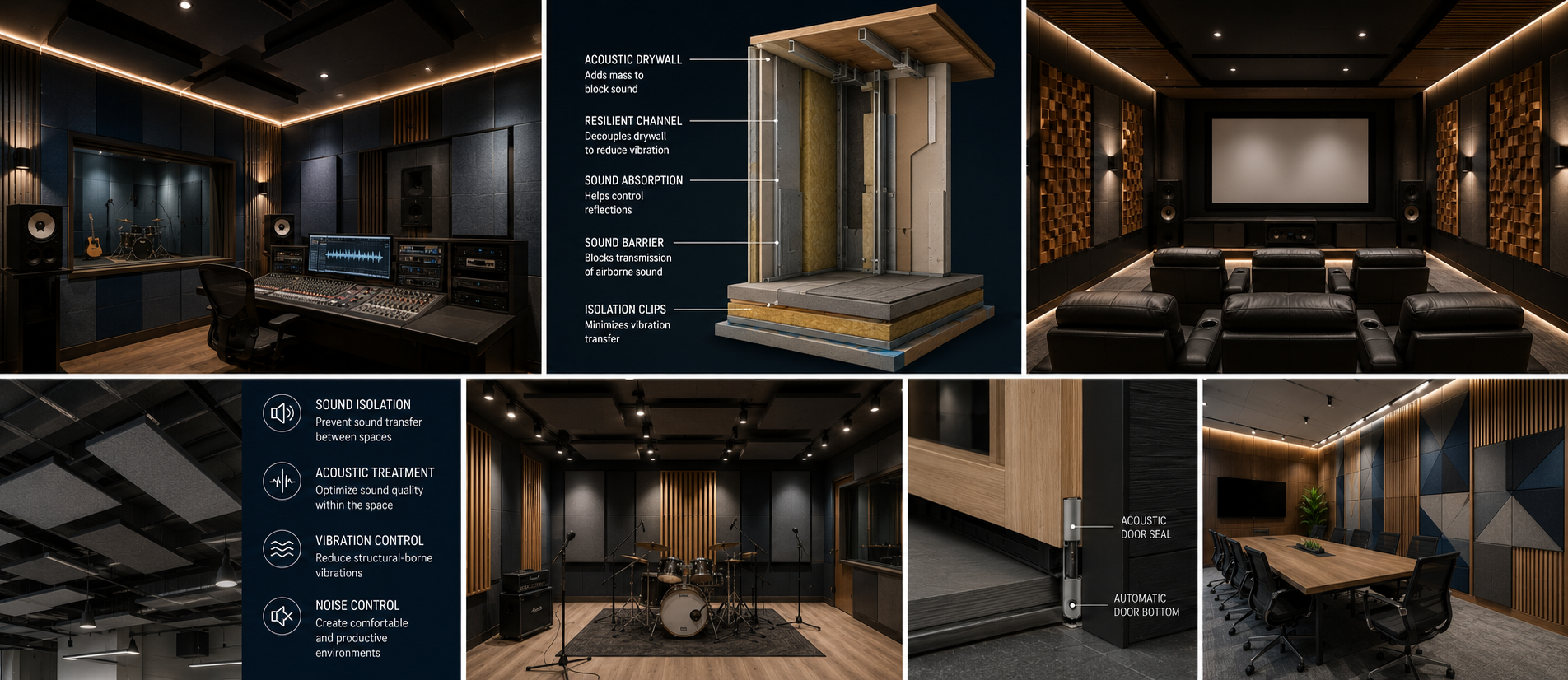
In a world where noise pollution is increasingly recognized as a significant health and productivity concern, professional sound isolation and acoustic engineering services have become essential for creating comfortable, functional, and healthy environments. From residential spaces seeking peace and tranquility to commercial facilities requiring privacy and concentration, acoustic engineering provides the technical expertise needed to control sound and create optimal acoustic environments.
Sound isolation and acoustic engineering go beyond simple noise reduction—they represent a comprehensive approach to understanding and controlling sound in built environments. Professional acoustic engineers use advanced scientific principles, measurement tools, and design strategies to address everything from airborne sound transmission to structure-borne vibrations, creating spaces that perform acoustically at the highest level.
"Acoustic engineering is the science of creating silence in a noisy world. Professional sound isolation transforms buildings from sources of stress into sanctuaries of peace, enhancing comfort, privacy, and quality of life."
Understanding Sound Isolation and Acoustic Engineering
Sound isolation and acoustic engineering encompass a broad range of services and solutions designed to control sound in buildings and environments. The discipline combines physics, engineering, and architectural design to achieve specific acoustic outcomes.
Core Areas of Acoustic Engineering
- Sound Isolation (Soundproofing): Preventing sound from traveling between spaces or from entering/exiting a building.
- Room Acoustics: Controlling how sound behaves within a space for optimal clarity and quality.
- Noise Control: Managing unwanted noise from mechanical systems, equipment, and external sources.
- Vibration Control: Addressing structure-borne sound and vibration transmission.
- Acoustic Design: Integrating acoustic considerations into architectural and interior design.
- Acoustic Measurement: Quantifying and analyzing acoustic performance using specialized equipment.
Professional Sound Isolation Solutions
Professional sound isolation addresses the challenge of preventing unwanted sound from entering or leaving spaces. This is critical in a wide range of applications, from residential buildings and offices to recording studios and industrial facilities.
1. Airborne Sound Isolation
Airborne sound travels through the air—voices, music, television, and other audible sounds. Effective isolation requires blocking these sound waves from passing through walls, floors, and ceilings.
Solutions:
- Mass-Law Construction: Adding mass to building elements with materials like drywall, mass-loaded vinyl, and concrete.
- Double-Wall Systems: Constructing two independent wall frames with an air gap for superior isolation.
- Resilient Channels: Decoupling wall surfaces from structural framing to reduce transmission.
- Acoustic Insulation: High-density insulation materials within wall and floor cavities.
- Acoustic Sealants: Flexible sealants for filling gaps and preventing sound leakage.
2. Impact Sound Isolation
Impact sound (structure-borne sound) is created by physical impacts—footsteps, dropped objects, moving furniture—that travel through building structures.
Solutions:
- Floating Floors: Decoupling the finished floor from the structural slab using resilient materials.
- Acoustic Underlayment: Resilient layers beneath floor coverings that absorb impact energy.
- Resilient Ceiling Systems: Ceiling systems that isolate from floor impacts above.
- Carpet and Padding: Soft floor coverings that absorb impact energy.
3. Mechanical and Equipment Noise Control
HVAC systems, plumbing, and building equipment can be significant sources of noise. Acoustic engineering addresses these sources through careful design and isolation.
Solutions:
- Vibration Isolation: Using spring mounts, rubber isolators, and neoprene pads to isolate equipment.
- Acoustic Duct Treatment: Sound-absorbing liners and silencers for HVAC ducts.
- Equipment Enclosures: Acoustic enclosures for noisy mechanical equipment.
- Pipe Isolation: Using pipe wraps and isolation hangers to reduce plumbing noise.
4. Door and Window Sound Isolation
Doors and windows are common weak points in sound isolation. Specialized solutions are required to maintain acoustic integrity.
Solutions:
- Acoustic Doors: Heavy doors with acoustic seals and multiple gaskets.
- Acoustic Glazing: Laminated glass and multi-pane windows with acoustic interlayers.
- Door Seals: Perimeter gaskets and automatic door bottoms that seal against sound leakage.
- Sound Locks: Vestibules with double doors creating an airlock between spaces.
5. Building Envelope Sound Isolation
External noise from traffic, aircraft, and other sources can intrude into buildings. The building envelope must be designed to prevent this.
Solutions:
- High-Performance Glazing: Windows with high STC ratings for external noise control.
- Exterior Wall Systems: Wall assemblies designed for sound isolation.
- Roof and Ceiling Isolation: Preventing noise from rooftop equipment and external sources.
- Acoustic Louvers: Ventilation openings that provide sound isolation.
Acoustic Engineering Services
1. Acoustic Measurement and Testing
Professional acoustic measurement is the foundation of effective acoustic design. Acoustic engineers use specialized equipment to quantify and analyze acoustic conditions.
Services:
- Reverberation Time Measurement: Measuring RT60 to assess room acoustics.
- Sound Transmission Testing: Measuring STC and IIC ratings to verify isolation.
- Noise Level Surveys: Measuring background noise levels and identifying sources.
- Vibration Analysis: Measuring and analyzing building vibrations.
- Modal Analysis: Identifying room modes and resonant frequencies.
2. Acoustic Design and Consulting
Acoustic engineers provide design consulting services for building projects, integrating acoustics into the design process.
Services:
- Building Acoustic Design: Integrating acoustics into overall building design.
- Room Acoustic Design: Optimizing acoustics for specific room functions.
- Mechanical System Noise Control: Designing quiet HVAC and mechanical systems.
- Vibration Control Design: Developing solutions for vibration-sensitive spaces.
- Acoustic Modeling: Using simulation software to predict acoustic performance.
3. Noise Control Solutions
Acoustic engineers develop comprehensive noise control strategies for a wide range of applications.
Services:
- Industrial Noise Control: Reducing noise in manufacturing and industrial facilities.
- Transportation Noise Control: Addressing noise from rail, road, and air traffic.
- Construction Noise Control: Managing construction noise to minimize community impact.
- Community Noise Management: Developing strategies for noise-sensitive areas.
4. Sound System Design and Integration
Acoustic engineers often work alongside AV consultants to ensure sound systems perform optimally within the acoustic environment.
Services:
- System Design: Designing sound reinforcement and public address systems.
- System Calibration: Tuning sound systems for optimal performance.
- Electro-Acoustic Design: Integrating electronics with acoustics for optimal results.
- Acoustic Feedback Control: Preventing feedback and other system issues.
Acoustic Engineering for Different Building Types
1. Residential Acoustic Engineering
In homes and residential buildings, acoustics affect comfort, privacy, and quality of life.
- Multifamily Dwellings: Meeting STC and IIC requirements for shared walls and floors.
- Single-Family Homes: Creating quiet, private spaces for relaxation and work.
- Luxury Residences: Premium acoustic solutions for high-end homes.
- Home Theatres: Professional sound isolation and acoustic treatment for entertainment spaces.
2. Commercial Acoustic Engineering
Commercial spaces require acoustics that support productivity, communication, and customer experience.
- Office Buildings: Open plan office acoustics, meeting room design, and privacy solutions.
- Retail Spaces: Noise control for comfortable shopping environments.
- Hospitality: Hotel, restaurant, and venue acoustics for guest satisfaction.
- Healthcare: Patient room isolation and quiet healing environments.
3. Institutional Acoustic Engineering
Educational and institutional facilities require specialized acoustic design.
- Schools: Classroom acoustics for effective learning.
- Universities: Lecture halls, libraries, and research facilities.
- Healthcare: Hospitals, clinics, and medical facilities.
- Government Buildings: Courtrooms, council chambers, and public spaces.
4. Performance and Entertainment Acoustic Engineering
Performance spaces demand the highest level of acoustic engineering expertise.
- Concert Halls: World-class acoustics for orchestral and chamber music.
- Theatres: Acoustics for drama, musicals, and live performances.
- Recording Studios: Precision acoustics for professional audio production.
- Cinemas: Immersive acoustic design for film presentations.
5. Industrial Acoustic Engineering
Industrial facilities present unique acoustic challenges that require specialized solutions.
- Manufacturing Plants: Worker protection, noise compliance, and community noise control.
- Power Plants: Noise control for power generation facilities.
- Data Centers: Managing noise from cooling systems and equipment.
- Laboratories: Quiet environments for research and testing.
6. Transportation and Infrastructure Acoustic Engineering
Transportation projects require comprehensive acoustic engineering for noise control.
- Airports: Aircraft noise management and terminal acoustics.
- Railways: Train noise control and station acoustics.
- Roads: Traffic noise barriers and road surface treatments.
- Tunnels: Acoustic design for underground transportation.
The Acoustic Engineering Process
Phase 1: Assessment and Analysis
Understanding the acoustic challenges and opportunities of the space.
- Noise Survey: Measuring existing noise levels and identifying sources.
- Acoustic Measurement: Quantifying acoustic conditions using specialized equipment.
- Regulatory Review: Understanding applicable standards and regulations.
- Client Consultation: Identifying goals and priorities for the acoustic solution.
Phase 2: Design and Specification
Developing comprehensive acoustic solutions.
- Acoustic Modeling: Using simulation software to predict and optimize performance.
- System Design: Developing detailed acoustic system specifications.
- Material Selection: Choosing appropriate acoustic materials and systems.
- Integration: Coordinating acoustics with other building systems.
Phase 3: Implementation
Overseeing construction and installation.
- Construction Oversight: Ensuring acoustic design is implemented correctly.
- Quality Control: Testing and verification during construction.
- Installation Supervision: Ensuring proper installation of acoustic systems.
Phase 4: Verification and Tuning
Confirming and optimizing acoustic performance.
- Acoustic Testing: Measuring final acoustic conditions.
- Performance Verification: Ensuring goals are achieved.
- System Tuning: Making final adjustments for optimal performance.
Phase 5: Ongoing Support
Ensuring long-term acoustic performance.
- Maintenance: Regular maintenance of acoustic systems.
- Performance Monitoring: Periodic testing to ensure continued performance.
- Upgrade Support: Advising on future upgrades and modifications.
Acoustic Engineering Standards and Ratings
Understanding acoustic ratings and standards is essential for specifying and evaluating acoustic performance.
| Rating | Description | Typical Values | Application |
|---|---|---|---|
| STC (Sound Transmission Class) | Measures airborne sound isolation of building elements | 30-70+ | Walls, floors, doors, windows |
| IIC (Impact Insulation Class) | Measures impact sound isolation of floors | 40-70+ | Floor-ceiling assemblies |
| NRC (Noise Reduction Coefficient) | Measures sound absorption of materials | 0.00-1.00 | Acoustic panels, ceiling tiles |
| NC (Noise Criteria) | Measures acceptable background noise levels | 15-60 | HVAC and building noise |
| RT60 (Reverberation Time) | Measures the decay time of sound in a space | 0.3-2.5 seconds | Room acoustics design |
| OITC (Outdoor-Indoor Transmission Class) | Measures exterior sound isolation | 25-55 | Windows, exterior walls |
Benefits of Professional Acoustic Engineering
- Enhanced Comfort: Quiet, comfortable environments that promote well-being.
- Improved Productivity: Workspaces with reduced noise distractions.
- Better Privacy: Sound isolation for confidential conversations and private spaces.
- Regulatory Compliance: Meeting building codes and acoustic standards.
- Property Value: Acoustic quality adds significant value to buildings.
- Health and Well-being: Reduced stress and improved quality of life.
- Long-Term Satisfaction: Spaces that remain comfortable and functional for years.
"Professional acoustic engineering is an investment in quality of life. Sound isolation creates spaces where we can think clearly, rest peacefully, and connect meaningfully—free from the stress of unwanted noise."
Common Acoustic Engineering Mistakes to Avoid
- DIY Soundproofing: Professional expertise is essential for effective sound isolation.
- Incorrect Material Selection: Using the wrong materials or techniques for the application.
- Ignoring Low Frequencies: Low-frequency sound requires specialized solutions.
- Poor Sealing: Air gaps compromise even the best sound isolation systems.
- Inadequate Testing: Without measurement, performance cannot be verified.
- Overlooking Vibration: Structure-borne sound often goes unnoticed until addressed.
Future Trends in Acoustic Engineering
- Sustainable Acoustics: Eco-friendly materials and green building integration.
- Smart Acoustic Systems: Adaptive acoustics and IoT integration.
- Acoustic Wellness: Designing for mental and physical health through sound.
- Modular Solutions: Pre-engineered acoustic systems for faster installation.
- AI Integration: Intelligent design tools and predictive modeling.
- Active Acoustics: Electronic systems that adapt to the acoustic environment.
Why Choose Ray Acoustics for Acoustic Engineering
Ray Acoustics is a premier provider of professional sound isolation and acoustic engineering services in India. Our team of experienced engineers and consultants combines technical expertise with practical experience to deliver comprehensive acoustic solutions.
We offer a full range of acoustic engineering services, from measurement and analysis to design and implementation. Our approach is collaborative and client-focused, ensuring that every project meets the unique needs and goals of our clients.
With extensive experience across residential, commercial, industrial, and institutional projects, Ray Acoustics has the expertise to address any acoustic challenge. From small-scale residential projects to large-scale industrial facilities, we deliver solutions that exceed expectations.
Conclusion
Professional sound isolation and acoustic engineering services are essential for creating comfortable, functional, and healthy environments. In an increasingly noisy world, the ability to control sound is a valuable asset that enhances quality of life, productivity, and well-being.
At Ray Acoustics, we are dedicated to advancing the science and practice of acoustic engineering. Our team of experts combines technical excellence with creative problem-solving to deliver solutions that transform spaces into acoustic sanctuaries. Whether you're building a new home, designing an office, or upgrading an existing facility, we are committed to helping you achieve the acoustic environment you deserve.
Contact Ray Acoustics today to discover how our professional sound isolation and acoustic engineering services can enhance your space and improve your quality of life.