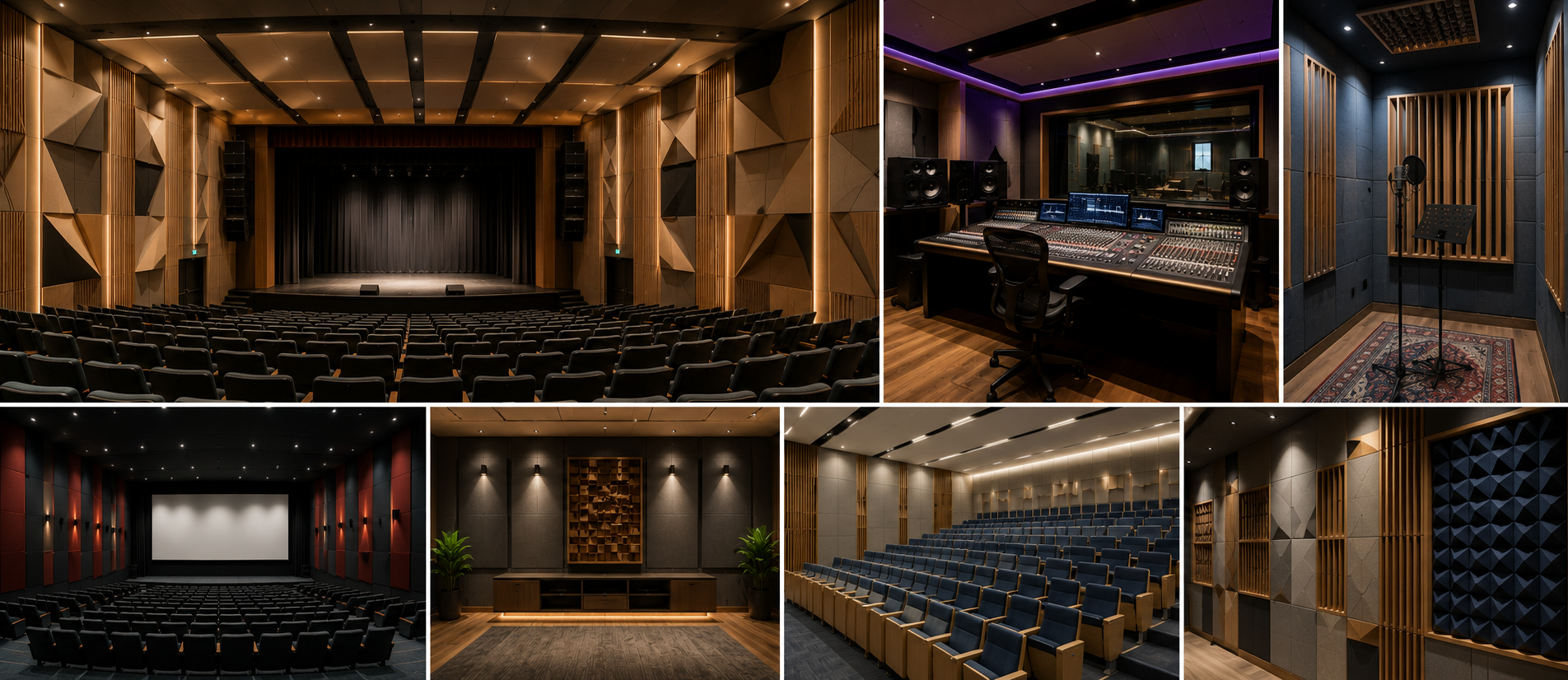
In the world of performing arts, media production, and public speaking, the quality of sound can make or break an experience. Acoustic design solutions for auditoriums, studios, and theatres are essential for creating spaces where every note, word, and sound effect is heard with clarity, warmth, and precision. These specialized performance spaces require meticulous acoustic planning that balances technical excellence with artistic expression, ensuring that both performers and audiences experience sound at its very best.
Whether it's a world-class concert hall, a state-of-the-art recording studio, or a multi-purpose theatre, professional acoustic design transforms empty spaces into extraordinary environments where art comes alive. The science of acoustics, combined with creative design, creates immersive experiences that captivate audiences and inspire performers.
"In performance spaces, acoustics are the soul of the experience. Great acoustic design allows artists to connect with audiences on a deeper level, creating moments of magic that transcend the ordinary."
Understanding Performance Space Acoustics
Performance spaces present unique acoustic challenges that require specialized expertise. Each type of space—auditoriums, studios, and theatres—has distinct acoustic requirements based on its primary use and audience experience.
Key Acoustic Parameters for Performance Spaces
- Reverberation Time (RT60): The time it takes for sound to decay by 60 decibels. Optimal RT60 varies by space type: concert halls need longer reverberation (1.8-2.5 seconds), while theatres require shorter times (1.0-1.5 seconds) for speech clarity.
- Clarity (C50/C80): The ratio of early to late sound energy, affecting speech intelligibility and musical definition.
- Sound Pressure Level (SPL): The volume of sound in the space, carefully controlled for comfort and performance quality.
- Background Noise Level: Minimizing unwanted noise from HVAC, equipment, and external sources is critical for performance quality.
- Sound Isolation: Preventing sound from leaking into or out of the performance space.
Acoustic Design for Different Performance Spaces
1. Auditorium Acoustics
Auditoriums are multi-purpose spaces designed for lectures, presentations, concerts, and theatrical performances. Their acoustic design must accommodate diverse uses while maintaining excellent sound quality for all applications.
Key Design Considerations:
- Room Shape and Volume: Auditorium geometry affects sound distribution and reverberation. Fan-shaped, shoebox, and vineyard designs each offer different acoustic characteristics.
- Reverberation Control: Variable acoustics allow adjustment for different uses—shorter RT for speech, longer for music.
- Sound Distribution: Ensuring even sound coverage throughout the audience seating area.
- Stage Design: The stage area must support both acoustical and reinforcement needs.
- Balcony and Seating: Balcony overhangs and seating geometry affect sound reflections and clarity.
Acoustic Solutions for Auditoriums:
- Acoustic Reflectors: Adjustable panels that direct sound from the stage to the audience.
- Variable Acoustic Systems: Motorized curtains, panels, and banners that adjust reverberation time.
- Acoustic Canopies: Suspended acoustic panels that control sound above the stage and audience.
- Sound Reinforcement Integration: Seamless integration of acoustic and electronic sound systems.
2. Recording Studio Acoustics
Recording studios demand the highest level of acoustic precision to capture pristine audio. The design must provide a neutral, controlled environment where musicians and engineers can work effectively.
Key Design Considerations:
- Control Room Acoustics: The mixing and monitoring room requires a flat frequency response and accurate stereo imaging.
- Live Room Acoustics: The performance space should have controlled acoustics with adjustable characteristics for different instruments and genres.
- Isolation Booths: Small rooms for isolated recording of vocals and instruments, with high sound isolation.
- Sound Isolation: Maximum isolation from external noise and between studio rooms.
- Monitoring Accuracy: Precise monitoring systems calibrated to the room acoustics.
Acoustic Solutions for Studios:
- Acoustic Treatment: Strategic placement of absorption, diffusion, and bass trapping for accurate sound.
- Room-in-Room Construction: Decoupled construction for maximum sound isolation.
- Adjustable Acoustics: Movable panels and variable systems for adapting room response.
- Calibration Systems: Electronic calibration tools for optimizing monitoring accuracy.
3. Theatre Acoustics
Theatres serve both spoken word and musical performances, requiring acoustics that balance speech clarity with musical warmth. The acoustic experience must support the dramatic and emotional impact of performances.
Key Design Considerations:
- Speech Clarity: Ensuring every word is heard clearly, even in the furthest seats.
- Musical Support: Providing appropriate reverberation and warmth for musical theatre.
- Orchestra Pit Acoustics: Managing sound from the pit to blend with stage performers.
- Balcony and Sightlines: Balancing visual and acoustic design for optimal audience experience.
- Sound System Integration: Seamless integration of sound reinforcement with natural acoustics.
Acoustic Solutions for Theatres:
- Acoustic Panels: Tuned to balance speech clarity and musical warmth.
- Adjustable Acoustics: Systems that adapt to different types of performances.
- Orchestra Pit Covers: Adjustable covers that modify pit acoustics and sound balance.
- Acoustic Doors: High-performance doors for sound isolation between theatre and lobby areas.
Acoustic Design Principles for Performance Spaces
1. Balancing Reverberation and Clarity
One of the most critical aspects of performance space design is finding the right balance between reverberation and clarity. Too much reverberation muddles speech and music, while too little makes the space feel dry and uninviting.
- Concert Halls: RT60 of 1.8-2.5 seconds for orchestral music, creating warmth and envelopment.
- Opera Houses: RT60 of 1.5-2.0 seconds, balancing speech and music.
- Drama Theatres: RT60 of 1.0-1.5 seconds, prioritizing speech clarity.
- Multi-Purpose Spaces: RT60 of 1.2-1.8 seconds, with variable systems for different uses.
2. Optimizing Room Geometry
The shape and dimensions of a performance space significantly affect its acoustic properties.
- Shoebox Shape: Traditional rectangular halls with excellent acoustics for music.
- Fan Shape: Wider halls that bring audiences closer to the stage.
- Vineyard Shape: Auditoriums with stepped seating around the stage, offering intimate experiences.
- Non-Parallel Walls: Reducing flutter echoes and standing waves.
3. Sound Distribution and Reflections
Controlling sound reflections ensures even sound distribution and natural acoustics.
- First Reflections: Early reflections from ceilings and walls provide a sense of envelopment.
- Lateral Reflections: Side-wall reflections contribute to spatial impression and warmth.
- Stage Reflections: Proper stage acoustics help performers hear themselves and each other.
- Diffusion: Scattering sound energy for a balanced and natural acoustic environment.
4. Sound Isolation
Preventing sound from entering or leaving performance spaces is essential for audience and performer experience.
- Structural Isolation: Decoupled construction to prevent vibration transmission.
- Acoustic Sealing: Sealing gaps and penetrations to maintain isolation.
- HVAC Noise Control: Quiet mechanical systems with acoustic treatment.
- Sound Locks: Vestibules with double doors to prevent sound leakage.
Acoustic Treatment Solutions
1. Absorption Systems
Acoustic absorption controls reverberation and reduces unwanted reflections.
- Acoustic Panels: Fabric-wrapped panels in various sizes and colors for wall and ceiling applications.
- Bass Traps: Corner-mounted units for controlling low-frequency sound.
- Acoustic Curtains: Heavy drapes that provide adjustable absorption.
- Acoustic Seating: Absorptive seating surfaces that contribute to room acoustics.
2. Diffusion Systems
Diffusers scatter sound reflections, creating a more natural and balanced acoustic environment.
- Quadratic Residue Diffusers (QRDs): Precision-engineered diffusers with excellent scattering characteristics.
- Skyline Diffusers: Two-dimensional diffusers for wall and ceiling applications.
- Diffusive Wood Panels: Architectural diffusers that blend with interior design.
- Diffusive Ceilings: Ceiling surfaces with integrated diffusion properties.
3. Variable Acoustics
Adjustable acoustic systems allow performance spaces to adapt to different types of events.
- Motorized Curtains: Adjustable absorption for variable reverberation.
- Rotating Panels: Panels with absorption on one side and reflection/diffusion on the other.
- Adjustable Reflectors: Moving panels that direct sound to different areas.
- Electronic Acoustics: Systems that use speakers and microphones to modify acoustic characteristics.
The Performance Space Design Process
Phase 1: Feasibility and Analysis
- Needs Assessment: Understanding the intended use, audience capacity, and technical requirements.
- Site Evaluation: Assessing the building location, construction, and environmental factors.
- Acoustic Modeling: Using simulation software to predict acoustic performance.
- Budget Planning: Aligning design with financial parameters.
Phase 2: Conceptual Design
- Room Layout: Determining seating capacity, stage size, and geometry.
- Acoustic Design: Developing the acoustic strategy for the space.
- System Integration: Planning for sound reinforcement, lighting, and AV systems.
- Aesthetic Design: Creating a visually appealing space that supports acoustics.
Phase 3: Detailed Design
- Technical Specifications: Detailed specifications for acoustic materials and systems.
- Construction Drawings: Preparing construction documentation with acoustic details.
- System Design: Detailed design of AV and sound reinforcement systems.
- Acoustic Verification: Final acoustic modeling and verification.
Phase 4: Construction and Installation
- Construction Oversight: Ensuring acoustic design is implemented correctly.
- System Installation: Installing acoustic treatments and AV systems.
- Quality Control: Testing and verification during construction.
Phase 5: Commissioning and Tuning
- Acoustic Testing: Measuring reverberation time, clarity, and other parameters.
- System Calibration: Adjusting sound reinforcement and monitoring systems.
- Fine-Tuning: Making final adjustments for optimal performance.
Phase 6: Ongoing Support
- Maintenance: Regular maintenance of acoustic treatments and systems.
- Calibration: Periodic recalibration of systems.
- Upgrades: Support for future system upgrades and modifications.
Acoustic Design Comparison by Space Type
| Parameter | Auditorium | Recording Studio | Theatre | Concert Hall |
|---|---|---|---|---|
| RT60 Target | 1.2-1.8 sec | 0.3-0.6 sec | 1.0-1.5 sec | 1.8-2.5 sec |
| Sound Isolation | High | Very High | High | Moderate-High |
| Background Noise | NC 15-25 | NC 10-15 | NC 15-20 | NC 15-20 |
| Variable Acoustics | Often Required | Sometimes | Often Required | Rarely |
| Sound Reinforcement | Integrated | Monitoring Focus | Integrated | Minimal |
| Primary Use | Multi-Purpose | Recording | Drama/Musical | Orchestral Music |
Notable Performance Spaces in India
India is home to several world-class performance spaces that showcase excellence in acoustic design:
- National Centre for the Performing Arts (NCPA), Mumbai: Multiple venues including the Tata Theatre and Jamshed Bhabha Theatre with exceptional acoustics.
- Shanmukhananda Hall, Mumbai: A premier venue for classical music and dance with acclaimed acoustics.
- Bharat Bhavan, Bhopal: A multi-arts complex with thoughtfully designed performance spaces.
- Kamani Auditorium, Delhi: A venue known for its excellent acoustics and intimate atmosphere.
- Amphitheatre, NCPA, Mumbai: An outdoor venue with innovative acoustic design for open-air performances.
"The best performance spaces are invisible—they don't draw attention to themselves, but instead allow the art to speak. Great acoustic design disappears, leaving only the magic of the performance."
Common Mistakes in Performance Space Acoustics
- Insufficient Acoustic Treatment: Not enough absorption or diffusion leads to poor clarity.
- Over-Absorption: Too much absorption creates a "dead" sound that lacks life and energy.
- Ignoring Low Frequencies: Inadequate bass control results in muddy sound.
- Poor Stage Acoustics: Performers need to hear themselves and each other effectively.
- Inadequate Isolation: External noise intrudes, compromising performance quality.
- Wrong RT60 for Purpose: Mismatched reverberation time for the intended use.
Future Trends in Performance Acoustics
- Immersive Audio: Technologies like Dolby Atmos and spatial audio in performance spaces.
- Active Acoustics: Electronic systems that modify room acoustics in real-time.
- Sustainable Materials: Eco-friendly acoustic materials for green building design.
- Flexible Spaces: Multi-use venues with highly adaptable acoustics.
- Virtual Acoustics: Digital simulation and modeling for design optimization.
- Acoustic Heritage: Preserving and restoring the acoustics of historic venues.
Why Choose Ray Acoustics for Performance Spaces
Ray Acoustics is a leader in performance space acoustic design in India. With extensive experience in auditoriums, studios, and theatres, our team brings a deep understanding of both the technical and artistic dimensions of performance acoustics.
Our approach is collaborative and comprehensive. We work closely with architects, theatre consultants, and building owners to create spaces that inspire and delight. From the earliest design stages through final commissioning, we ensure that every acoustic detail contributes to an exceptional experience.
Our portfolio includes a diverse range of performance spaces, from small recording studios to large concert halls. We combine scientific rigor with creative sensitivity, delivering acoustic environments that support artistic expression and captivate audiences.
Conclusion
Acoustic design for auditoriums, studios, and theatres is both a science and an art. It requires technical expertise to understand and control sound, and creative vision to create spaces that inspire and connect. Professional acoustic design transforms performance spaces into extraordinary environments where art comes alive.
At Ray Acoustics, we are dedicated to advancing the art and science of performance acoustics. Our team of experts combines deep technical knowledge with creative sensitivity, delivering acoustic solutions that exceed expectations. Whether you're building a new performance space or renovating an existing venue, we are committed to creating environments where artists and audiences can connect through the power of sound.
Contact Ray Acoustics today to discover how our acoustic design solutions can transform your auditorium, studio, or theatre into a world-class performance space.