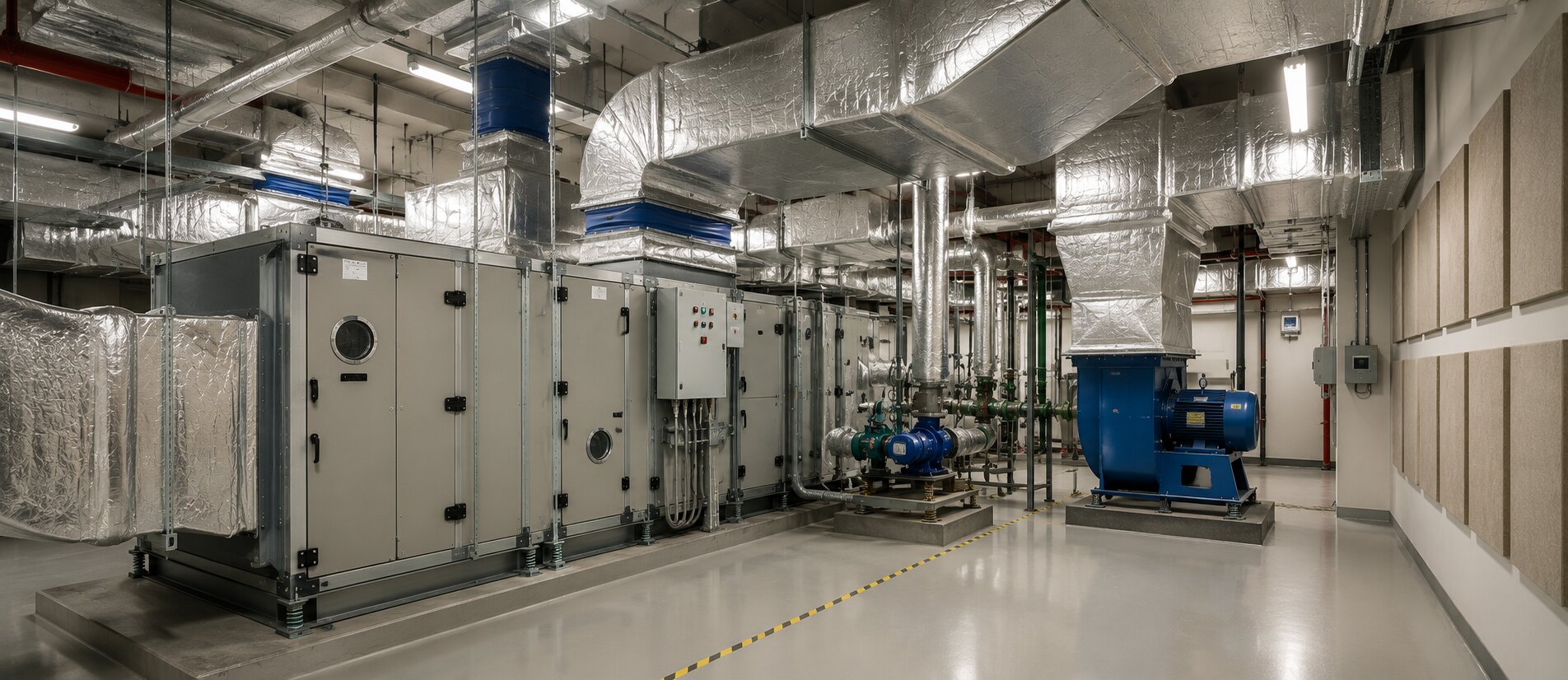
Modern buildings depend on heating, ventilation and air-conditioning systems to maintain comfortable indoor temperatures and healthy air circulation. However, HVAC systems can also become a significant source of unwanted mechanical noise.
Fan noise, air movement, vibration, compressors, pumps, ducts and mechanical equipment can transmit sound throughout a building. Without proper acoustic planning, this noise can affect concentration, communication, productivity and occupant comfort.
Effective HVAC noise control begins during the design stage rather
than after mechanical systems have already been installed.
What Is HVAC Noise?
HVAC noise refers to unwanted sound generated by heating, ventilation and air-conditioning equipment and the systems used to distribute air throughout a building.
HVAC-related noise can originate from mechanical equipment, air movement, vibration and the interaction between airflow and ductwork.
The noise may then travel through air, building structures, ducts, ceilings, walls or other connected components.
Common Sources of HVAC Noise
HVAC systems contain several components that can generate or transmit unwanted sound.
- Air handling units and ventilation equipment.
- Fans and blowers.
- Compressors and chillers.
- Pumps and motors.
- Air movement through ducts.
- Dampers and grilles.
- Mechanical vibration.
- Duct and equipment connections.
Identifying the actual source of the noise is an important first step before selecting an appropriate control strategy.
Why HVAC Noise Control Matters
Excessive mechanical noise can reduce the acoustic quality of an otherwise well-designed building.
In offices, HVAC noise can interfere with conversations, meetings and concentration. In hospitals and healthcare environments, unwanted mechanical noise can affect the overall sense of comfort and tranquillity.
Hotels, educational facilities, studios and residential buildings can also benefit from careful HVAC acoustic design.
Airborne HVAC Noise
Airborne noise occurs when sound travels through the air. In HVAC systems, fan and airflow noise can travel through ductwork and reach occupied rooms through air outlets.
Controlling airborne HVAC noise requires attention to equipment selection, airflow velocity, duct design and acoustic treatment.
HVAC Vibration and Structure-Borne Noise
Mechanical equipment can create vibration when motors, compressors, fans and pumps operate.
If this vibration is transferred directly into the building structure, it can result in structure-borne noise.
This is why vibration isolation is an important part of HVAC noise control.
Equipment Selection for Lower HVAC Noise
One of the earliest opportunities for reducing mechanical noise is selecting appropriately rated HVAC equipment.
Equipment should be evaluated not only for energy efficiency and capacity but also for its acoustic characteristics.
Lower-noise fans, motors, chillers and air-handling equipment can reduce the amount of sound that needs to be controlled later in the system.
Controlling Airflow Noise
Air moving through ducts can generate turbulence and unwanted sound, particularly when airflow velocity is high or duct transitions are poorly designed.
Appropriate duct sizing, smooth transitions and careful diffuser selection can help reduce airflow-related noise.
Airflow design should therefore be considered together with the acoustic requirements of the building.
Acoustic Duct Treatment
Acoustic duct treatment can help reduce sound transmission through ventilation systems.
Depending on the design, solutions may include duct lining, acoustic insulation, silencers or attenuators.
These systems can help reduce the amount of mechanical sound travelling from HVAC equipment into occupied areas.
HVAC Silencers and Sound Attenuators
HVAC silencers and sound attenuators are designed to reduce noise travelling through air-conditioning and ventilation systems while maintaining the required airflow.
They are commonly considered near major mechanical equipment or in locations where duct-borne noise needs additional control.
The correct solution depends on the required airflow, available space, pressure drop and acoustic performance.
Vibration Isolation
Mechanical equipment should be isolated from the supporting structure wherever vibration transmission could become a problem.
Isolation mounts, springs and other appropriate systems can help reduce the transfer of mechanical vibration into floors, walls and structural elements.
Proper installation is essential because even a well-selected vibration isolation system may perform poorly if it is incorrectly installed.
Flexible Connections
Flexible connections can help reduce the transfer of vibration between mechanical equipment and connected ductwork or piping.
They can be particularly useful around fans, air-handling units and other vibrating equipment.
The connections should be selected and installed according to the mechanical and acoustic requirements of the system.
Duct Layout and Acoustic Planning
The layout of ductwork can influence how mechanical sound travels through a building.
Routing noisy mechanical services away from acoustically sensitive spaces can reduce the risk of unwanted noise.
Bedrooms, recording studios, conference rooms, classrooms and healthcare spaces may require additional consideration during HVAC planning.
HVAC Noise Control in Offices
Offices often require low background noise levels because employees need to communicate, concentrate and participate in meetings.
Excessive HVAC noise can become particularly noticeable in open-plan workspaces.
A combination of quiet equipment, appropriate airflow design, vibration isolation and acoustic treatment can help improve the acoustic environment.
HVAC Noise Control in Hospitals
Healthcare facilities require careful acoustic planning because patients and healthcare professionals may be particularly sensitive to unwanted noise.
Mechanical services should therefore be designed to limit noise transmission into patient rooms, consultation rooms, treatment areas and other acoustically sensitive spaces.
HVAC Noise Control in Hotels
Guest comfort is an important consideration in hotels. Mechanical noise from air-conditioning systems can become especially noticeable in bedrooms during quiet periods.
Equipment location, duct routing, vibration isolation and acoustic treatment can all contribute to a quieter guest environment.
HVAC Noise Control in Recording Studios
Recording studios and media production spaces require particularly careful mechanical noise control.
Even relatively low background mechanical noise can become noticeable during recording and mixing.
HVAC systems for studios therefore require careful coordination between acoustic isolation, airflow requirements and equipment selection.
Common HVAC Noise Control Measures
- Select low-noise HVAC equipment.
- Control airflow velocity.
- Use suitable duct acoustic treatment.
- Install silencers or sound attenuators where required.
- Provide appropriate vibration isolation.
- Use flexible mechanical connections.
- Plan duct routes carefully.
- Keep noisy equipment away from sensitive rooms.
- Coordinate mechanical and acoustic design early.
Why HVAC Acoustic Design Should Start Early
Retrofitting acoustic controls after a building has been completed can be more difficult and expensive than including them during the original design.
Early coordination allows architects, mechanical engineers and acoustic consultants to consider equipment locations, duct routing, ceiling systems, wall construction and vibration control together.
This integrated approach can produce better acoustic results while reducing the need for corrective work later.
Measuring HVAC Noise
Noise assessment can help determine whether HVAC systems are contributing excessive background sound in occupied spaces.
Measurements and acoustic analysis can help identify the frequency characteristics and likely transmission paths of mechanical noise.
The results can then be used to develop appropriate control measures for the specific building.
Professional HVAC Noise Control
HVAC noise control is not simply about adding acoustic materials after mechanical equipment has been installed. Effective results require coordination between mechanical systems, building construction and acoustic design.
At Ray Acoustics, acoustic solutions can be planned around the specific requirements of offices, healthcare facilities, hotels, educational spaces, studios and other buildings.
The objective is to reduce unwanted mechanical noise while maintaining the required performance of the HVAC system.
Conclusion
HVAC systems are essential for comfortable and healthy buildings, but poorly controlled mechanical noise can negatively affect the acoustic environment.
Effective HVAC noise control combines quiet equipment, appropriate airflow design, acoustic duct treatment, vibration isolation, flexible connections and careful system planning.
The most effective approach is to consider acoustic requirements during the early stages of building and HVAC design.
With the right combination of mechanical and acoustic strategies, buildings can achieve improved comfort, clearer communication and a quieter indoor environment.
If your project requires HVAC noise control or a complete acoustic assessment, Ray Acoustics can help develop an acoustic solution suited to the building and its intended use.